
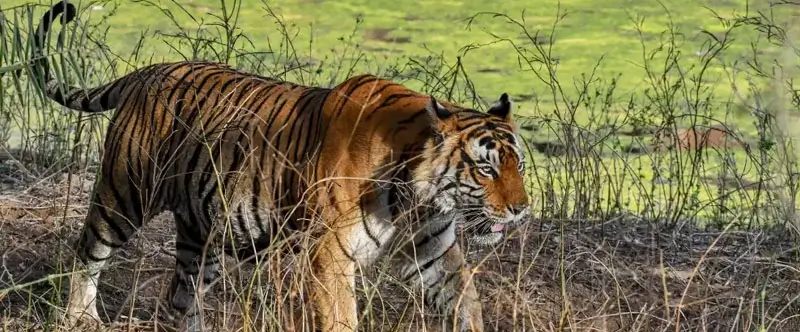
When travelers think of Ranthambore, the image that usually comes to mind is that of the majestic tiger. While spotting the big cat is thrilling, few realize that the region is equally extraordinary for something far gentler — its birds. Around the peaceful grounds of Maa Ashapura Boutique Farm, nature comes alive each morning with wings, songs, and colors that turn the landscape into a moving masterpiece.
This region of eastern Rajasthan is a mosaic of habitats — lakes, grasslands, dry forests, and farmlands — all thriving around Ranthambore National Park. Such ecological diversity attracts more than 300 species of birds, making it one of India’s richest birdwatching destinations. For many visitors, the thrill of watching a tiger in the wild becomes secondary to the quiet joy of spotting a rare owl, a painted stork in flight, or a peacock fanning its feathers under the sunrise.
At Maa Ashapura Farm, birdwatching is not an organized activity limited to safaris — it’s part of everyday life. The trees, ponds, and organic fields surrounding the property naturally invite feathered visitors, turning your morning tea into a private bird show.
At dawn, the sky over Ranthambore begins to glow softly as the desert air fills with melody. The first to break the silence is often the Indian robin or the bulbuls. Soon, parakeets chatter from the neem trees, and peacocks call from distant rooftops.
Guests at Maa Ashapura Boutique Farm often wake to this chorus of life. Many enjoy taking a slow walk through the property’s pathways before breakfast, guided only by sound. Spotting a purple sunbird feeding on bougainvillea or a pair of white-throated kingfishers perched on a fence becomes the perfect start to a peaceful day.
Even those who have never considered themselves birdwatchers find it impossible to ignore the beauty of the scene. With binoculars in hand and a cup of chai, it’s easy to spend hours simply observing nature’s rhythm.
The farm itself is a microcosm of biodiversity. The organic fields and native trees create a natural habitat for many small and migratory birds. During the cooler months between October and March, the region welcomes flocks of winter visitors from as far as Central Asia and Siberia.
Common residents include Indian rollers, drongos, green bee-eaters, and lapwings that thrive around the cultivated areas. The ponds near the property attract white-breasted waterhens, egrets, and pond herons, which can be seen elegantly wading through the reeds.
Occasionally, guests are treated to rarer sightings — a shikra hovering above the fields or a spotted owlet peeking from the hollow of an old tree. Evening walks often bring views of nightjars gliding silently through the twilight sky.
Because the farm avoids pesticides and chemical fertilizers, insects flourish — and where there are insects, there are birds. This balance of natural life makes Maa Ashapura Boutique Farm a sanctuary not just for humans but for wildlife in its purest form.
While Bharatpur’s Keoladeo National Park is India’s best-known bird reserve, Ranthambore quietly offers similar richness without the crowds. Just a few kilometers from Maa Ashapura Farm, you’ll find several lakes, canals, and woodlands that are a birdwatcher’s dream.
Surwal Lake, about 15 minutes from the property, is among the best. In winter, it becomes a mirror for hundreds of migratory species — flamingos, bar-headed geese, pintails, and demoiselle cranes. Watching these elegant travelers wade through shimmering waters with the Aravalli hills in the backdrop feels surreal.
Another must-visit is Soorwal Lake, known for its pelicans, spoonbills, and painted storks. Early mornings are magical here, when fog hangs low and the reflection of wings ripples across still water.
Inside Ranthambore National Park, even the non-tiger zones are teeming with avian wonders. The Padam Talao, with its lily-covered waters, draws herons, cormorants, and darters that dry their wings on ancient branches. Jogi Mahal, set against this lake, creates a postcard-perfect view that bird lovers never forget.
For those who prefer less-traveled paths, the Banas River and Mansarovar Lake also offer incredible sightings. These wetlands host both migratory and resident birds year-round.
Birdwatching around Maa Ashapura Farm changes beautifully with the seasons.
During monsoon months, the land turns lush and green. Egrets follow farmers plowing fields, and peacocks perform their iconic dance amid rain showers. Resident species like babblers, mynas, and tailorbirds stay active, while nesting season brings endless activity and cheerful calls.
Winter transforms Ranthambore into a global hub of migration. Thousands of birds arrive seeking warmth — from Siberian rubythroats to rosy starlings. The clear skies and golden light make it the ideal season for photographers.
In summer, though the heat intensifies, many dryland specialists like Indian courser, ashy-crowned sparrow lark, and paradise flycatcher appear. The lack of foliage offers clearer visibility for keen observers.
No matter when you visit, the diversity ensures that the experience remains rewarding. The Golden Triangle of birding — Ranthambore, Bharatpur, and Chambal — can easily be combined for serious enthusiasts staying longer.
For photographers, the Ranthambore region offers textures and tones unmatched anywhere else in India. Early light falling on the rugged hills, combined with colorful birds in flight, creates dramatic compositions.
At Maa Ashapura Boutique Farm, photography is encouraged as part of the wellness experience — a mindful practice that requires focus, patience, and stillness. Guests often spend mornings learning how to capture birds ethically — keeping distance, avoiding flash, and prioritizing observation over perfection.
Some of the most photogenic species include Indian peafowl, black-shouldered kite, coppersmith barbet, rufous treepie, and the vibrant bee-eater. Macro enthusiasts can also find opportunities in butterflies and insects that share the ecosystem.
The property occasionally hosts bird photography retreats, where small groups explore nearby wetlands with expert naturalists, combining nature walks with creative learning.
The beauty of Ranthambore’s birdlife lies not just in its diversity, but in its interdependence. Wetlands, trees, and farmlands support each other in balance.
The fields at Maa Ashapura Farm serve as feeding grounds for insectivores that keep pest levels in check naturally. The ponds sustain amphibians, which in turn attract herons and egrets. Even fallen leaves create microhabitats for worms and bugs, enriching the soil.
This harmony showcases the core philosophy of sustainable tourism in Rajasthan — that prosperity and preservation can coexist. Guests witnessing this circle of life often leave with a deeper understanding of ecology and appreciation for responsible travel.
Birdwatching is more than a hobby — it’s a meditation. Sitting quietly by the farm’s pond, listening to distant calls and fluttering wings, one begins to feel time slow down. The attention shifts from thought to presence.
At Maa Ashapura Boutique Farm, this sense of calm becomes part of the daily rhythm. Yoga practitioners often combine morning asanas with silent birdwatching afterward, allowing mind and nature to merge effortlessly.
Even families and children find it engaging. For younger guests, spotting birds with binoculars becomes an adventure that nurtures curiosity and respect for wildlife. The resort provides simple bird checklists so guests can record sightings — a fun, educational souvenir that connects them more deeply to nature.
The presence of so many birds around the farm is not accidental. It’s the result of eco-friendly practices that preserve the land’s health. Avoiding chemical sprays ensures safe feeding for birds. The plantation of native trees like neem, khejri, and amaltas provides nesting shelters and shade.
Water harvesting ponds create micro-wetlands that attract ducks and waders. Even the resort’s architecture, with open courtyards and natural fencing, avoids barriers to flight paths.
Guests are encouraged to follow ethical wildlife viewing guidelines — keeping distance, minimizing noise, and leaving no trace. By doing so, they become partners in protecting Ranthambore’s fragile ecosystem.
Through its example, Maa Ashapura Farm proves that tourism can be a force for conservation rather than disruption.
While tiger safaris remain the highlight for many, the true magic of Ranthambore unfolds in its quiet corners — a flash of color on a branch, the call of a koel, or the graceful flight of a stork across sunset skies.
Birdwatching offers travelers something that tiger sightings cannot — certainty. You may not see a tiger on every trip, but you will always encounter life, movement, and wonder in the air.
At Maa Ashapura Boutique Farm, guests often find that birdwatching changes the entire pace of their stay. Instead of chasing moments, they begin to observe them — appreciating the smaller miracles of nature.
It’s a gentle reminder that in the wild, everything has its place — and even the smallest songbird contributes to the grand story of life.
Q.1 How many bird species can be found around Maa Ashapura Farm?
Over 300 species have been recorded in the Ranthambore region, including migratory and resident birds.
Q.2 When is the best time for birdwatching in Ranthambore?
From October to March, when migratory birds arrive and the weather is cool and clear.
Q.3 Can beginners enjoy birdwatching here?
Yes, the property offers simple guided walks suitable for first-time birdwatchers.
Q.4 Do I need to carry my own binoculars?
You can bring your own, but basic binoculars are also available at the farm on request.
Q.5 Are professional birding guides available?
Yes, the resort collaborates with naturalists who specialize in bird identification and ecology.
Q.6 Is bird photography allowed around the farm?
Absolutely. Guests are welcome to photograph birds responsibly without disturbing them.
Q.7 What kind of birds can I expect to see near the farm?
Common sightings include peacocks, bee-eaters, rollers, egrets, kingfishers, and storks.
Q.8 Can I visit nearby lakes like Surwal or Soorwal for birding?
Yes, short trips can be arranged from the property to these wetlands for half-day excursions.
Q.9 Does birdwatching require safari permits?
No, birding around lakes and villages is open access and does not require park entry.
Q.10 Is this experience suitable for families?
Yes, it’s an ideal family activity — peaceful, educational, and deeply engaging for all ages.

Stay close to nature at Maa Ashapura Farm – a
boutique retreat near Ranthambore National Park.
Enjoy wildlife safaris, Marwari horse experiences, yoga, nature walks, and
private dining.