
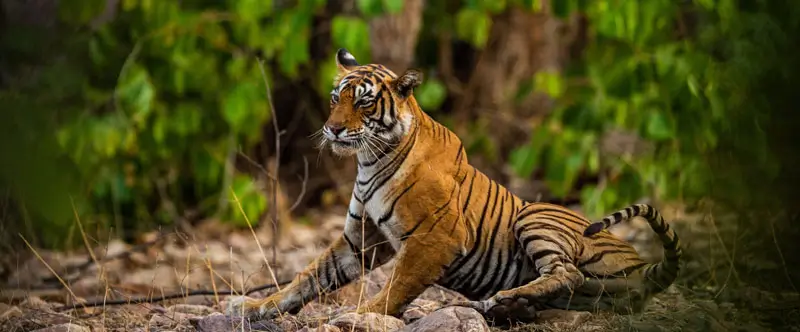
Ranthambore National Park is a dream for photographers. While most travelers visit hoping to spot a tiger, photographers know that this park is much more than that. It is a canvas painted with ancient forts, serene lakes, exotic birdlife, and the raw drama of the jungle.
Every turn of a safari track reveals a new frame. A peacock dancing in the early sunlight, a crocodile basking by a lake, or the majestic ruins of Ranthambore Fort rising against the backdrop of the Aravalli hills—all these moments make Ranthambore a paradise for shutterbugs.
If you are planning to visit the park with a camera, this detailed guide will take you through the top photography spots in Ranthambore and also provide tips for capturing its wildlife and landscapes like a pro.
Padam Talao is the largest lake in Ranthambore and one of the most photogenic spots in the park. In the early morning, the surface of the lake glistens like glass, reflecting the surrounding trees and sky.
The highlight here is the Jogi Mahal, a red sandstone hunting lodge situated at the edge of the lake. Capturing its silhouette at sunrise or sunset creates postcard-worthy frames. During winter, Padam Talao is also home to migratory birds, making it perfect for bird photography.
If you want to capture Ranthambore’s unique mix of history and wilderness, Rajbagh Talao is the place. The lake is surrounded by crumbling palaces and arches, once part of royal hunting grounds. These ruins now form the backdrop against which deer, monkeys, and sometimes even tigers can be photographed.
The reflection of the ruins in the water, combined with wildlife activity around the lake, makes this spot a photographer’s delight. Early mornings and late evenings give the best golden light here.
Smaller than the other two, Malik Talao is a tranquil spot often overlooked by tourists. But for photographers, it is pure magic. The lake attracts a wide variety of bird species—painted storks, herons, kingfishers, and even rare species like the Indian skimmer.
The stillness of the water provides stunning reflection shots. Crocodiles basking along the banks add dramatic frames for wildlife photographers.
The Ranthambore Fort, a UNESCO World Heritage site, offers spectacular vantage points for landscape photographers. From the top, you can capture wide-angle shots of the park’s forests, lakes, and hills.
Inside the fort, crumbling gates, temples, and hidden courtyards offer endless opportunities for architectural photography. The Trinetra Ganesh Temple inside the fort is another great spot for capturing cultural moments with pilgrims and devotees.
Tigers may be Ranthambore’s stars, but leopards are the elusive celebrities. Kachida Valley, with its rocky outcrops and dense vegetation, is one of the best places to spot and photograph leopards.
The rocky terrain here provides dramatic backdrops, especially when a leopard is perched on a boulder or camouflaged among the rocks. Long telephoto lenses are essential for this zone.
Jhalra is a natural waterhole surrounded by thick forest. It is a hotspot for wildlife activity, especially in summers when animals come to drink. Patience is rewarded here, as you may capture tigers, sambars, and langurs all in the same frame.
The golden evening light filtering through the trees at Jhalra creates mystical photography conditions.
Sometimes the best photography spots are not static locations but the very safari tracks themselves. As you drive through the park, animals often cross paths, giving you chances for action shots—deer leaping, monkeys swinging, or even a tiger suddenly appearing.
Keep your camera ready at all times because the jungle is unpredictable, and the best frames are often spontaneous.
Always respect animals—no flash, no calling out to them.
Ranthambore National Park is not just about tigers—it is about frames that tell stories. From ancient ruins blending with wilderness to serene lakes reflecting birds in flight, every corner of the park is a canvas waiting for a lens.
For photographers, the park offers a unique opportunity to capture wildlife, landscapes, and culture all in one destination. With patience, preparation, and respect for nature, you can return with a collection of photographs that not only showcase Ranthambore’s beauty but also preserve its magic forever.
So next time you pack your gear for Ranthambore, remember—it’s not about chasing a tiger alone, but about capturing the untold stories of the jungle.
Stay close to nature at Maa Ashapura Farm – a
boutique retreat near Ranthambore National Park.
Enjoy wildlife safaris, Marwari horse experiences, yoga, nature walks, and
private dining.