
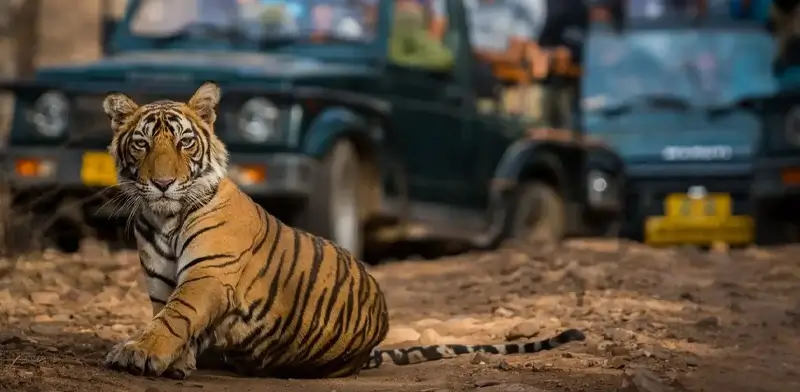
There’s something unmistakably powerful about locking eyes—even for a fleeting second—with a wild tiger. And in Ranthambore, that feeling is more than just possible; it’s part of the park’s identity. Over the years, this iconic forest has been home to some of the most legendary tigers in India. Their stories are as dramatic and emotional as the jungle itself, passed down by guides, photographers and conservationists.
At Maa Ashapura Boutique Farm, we often hear our guests return from safaris not just excited about tiger sightings but about which tiger they saw. Because in Ranthambore, every tiger has a name, a territory, a personality, and a tale.
Here are a few of the famous tigers past and present that you might spot (or hear stories about) during your visit.
If Ranthambore has a legend, it’s Machli. She wasn’t just the most photographed tiger in the world—she was a symbol of strength, longevity, and fierce maternal care. Machli ruled the lake area (Zone 3) for years and raised several litters, many of whose offspring now dominate various zones in the park. Machli once took down a crocodile in a dramatic fight, earning global fame and a place in conservation history. Though she passed away in 2016, her bloodline continues to shape Ranthambore’s tiger population. Seeing one of her descendants feels like witnessing a legacy in motion.
One of Machli’s daughters, Arrowhead, inherited her mother’s strong presence and striking appearance. She is named after the arrow-like mark on her face and is known for her calm, composed behavior—though she’s not afraid to defend her territory. Often seen in Zones 3 and 4, Arrowhead is a favorite among safari-goers and photographers for her confidence and frequent appearances near water bodies.
Arrowhead’s daughters, Riddhi and Siddhi, have continued the royal bloodline. Initially seen together as cubs, they eventually separated and claimed their own territories. Both are strong, bold tigresses, often seen patrolling the area around Ranthambore Fort and nearby forest zones (especially Zone 4). They are known for their territorial disputes and dynamic movements—keeping guides on their toes and making them popular subjects of recent safari tales.
T-57 is a large, powerful male known for ruling the Kundal and Chiri Kho area of Zone 6. He’s shy and doesn’t seek the spotlight, but his size and stealth make him unforgettable for those lucky enough to see him. Photographers love him for his quiet majesty, often capturing him walking alone along the hills or resting in shade.
Krishna, another daughter of Machli, held court over Zone 4 for several years. Calm, graceful, and fiercely protective, she raised several cubs—including Arrowhead. She was one of Ranthambore’s most successful mothers and gave visitors years of memorable sightings. Though she is no longer seen, her presence is still felt through her children and the tales shared by guides who watched her raise generations in the wild.
Among the newer tigers capturing attention is T-120, also known as Ganesh. Spotted often in Zone 10, he’s strong, active, and increasingly dominant in his territory. Visitors love his unpredictable movements. One minute he’s lounging by a stream, the next he’s on the move, chasing prey or patrolling his patch of forest.
His rise is being closely watched by regulars in Ranthambore.
A well-known tigress from the Chiroli range, T-86 has often been spotted with cubs and is known for her nurturing nature. She's built a reputation as one of the more visible and reliable tigers in certain zones, especially for those visiting the park during quieter months.
Ranthambore isn’t just about seeing a tiger it’s about witnessing stories unfolding in the wild. Each of these tigers carries a piece of the park’s history. They are not just animals; they are characters in a vast, untamed story—one with generations, rivalries, families, and shifting power. These tigers have adapted to life near humans, and some even appear just minutes after entering the zone. Others require deeper drives and quiet patience. But whether they show up boldly or remain elusive, knowing their stories brings depth to your safari.
Choose your zone carefully. Some tigers have well-established territories. Our team at Maa Ashapura Boutique Farm helps guests choose safari zones based on recent sightings.
Go more than once. A single safari might offer a glimpse. Multiple safaris give you a better chance to spot different individuals.
Listen to your guide. They know the latest movements, warning calls, and behavior patterns of these tigers.
Be patient and stay quiet. The forest has its rhythm, and the best sightings often come to those who wait.
The best thing about Ranthambore is that every visit offers something new. One day, you might see a tiger walking confidently down a forest path. The next, you may hear only the alarm calls and feel the intensity of a tiger nearby—but never see it. And yet, both experiences stay with you.
When you stay at Maa Ashapura Boutique Farm, we don’t just help you plan your safari—we help you connect with these stories. Because the jungle isn't just about sightings. It's about understanding the silent drama that plays out every day among the trees and lakes. And when you finally do spot one of these magnificent tigers, it won’t just be a photo. It’ll be a memory filled with meaning, part of a story that began long before you arrived and continues long after you leave.
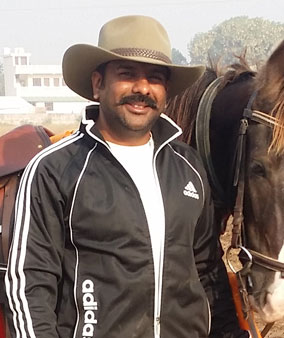
Stay close to nature at Maa Ashapura Farm – a
boutique retreat near Ranthambore National Park.
Enjoy wildlife safaris, Marwari horse experiences, yoga, nature walks, and
private dining.