
Ranthambore has never tried to present itself as a spiritual or wellness capital. There are no grand signboards announcing transformation, no tightly packaged retreat schedules, and no pressure to arrive seeking enlightenment. Yet, something subtle is happening. Travelers who come for wildlife, photography, or a break from routine increasingly leave speaking about calm, clarity, and emotional balance. Without intention, Ranthambore is becoming a place where yoga and mindfulness feel natural rather than curated.
This shift is not driven by trends. It is shaped by environment. The region’s open landscapes, forest edges, and slower pace create conditions where awareness deepens without effort. Yoga and mindfulness here do not feel like practices layered onto travel. They feel like responses to the place itself.
Many wellness destinations work hard to manufacture stillness. Music is chosen carefully, schedules are softened, silence is instructed. In Ranthambore, stillness already exists. It does not need explanation or structure.
Away from busy safari gates and tourist clusters, the region settles into quiet patterns. Mornings arrive gently. Afternoons stretch without urgency. Evenings slow naturally as light fades. This ambient calm allows the nervous system to settle without conscious practice. Travelers often find themselves breathing deeper, moving slower, and speaking less without realizing why. This is mindfulness emerging organically rather than being taught.
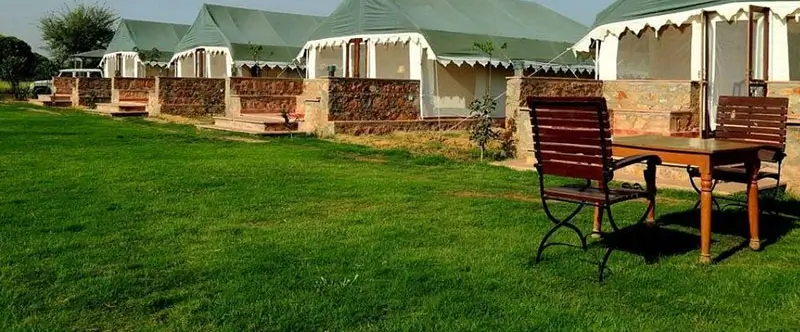
Escape the stress of everyday life and reconnect with yourself through peaceful farm stays, yoga sessions, mindful living, fresh countryside air, and calming natural surroundings near Ranthambore.
Chat On WhatsApp Contact UsMindfulness thrives in environments that do not overwhelm the senses. Ranthambore’s landscape offers balance rather than intensity. Forests, open fields, and distant hills create visual depth without clutter.
This visual simplicity allows attention to rest instead of scan. The mind stops searching for stimulation. Awareness turns inward effortlessly. Yoga and meditation practiced here feel supported by space rather than challenged by distraction.
Unlike urban settings where mindfulness requires effort, Ranthambore allows awareness to arise as a natural response to environment.
In many places, yoga is scheduled tightly around clocks. Sessions begin and end according to convenience rather than readiness. Near Ranthambore, yoga often aligns with light, temperature, and energy instead.
Morning practices feel expansive as air remains cool and quiet. Evening sessions become slower, more reflective as the land winds down. The body responds intuitively to these rhythms, making practice feel less forced.
Practitioners often notice that poses feel easier to inhabit, not because of physical improvement, but because the environment supports patience and presence.
One of the most striking differences in Ranthambore’s emerging wellness identity is the absence of performance. There is no expectation to achieve, transform, or display progress.
Without mirrors, crowds, or comparison, yoga and mindfulness return to their internal focus. Practitioners stop checking form and start sensing alignment. Meditation becomes an experience rather than a task.
This lack of performance pressure creates emotional safety, allowing deeper engagement with practice.
Silence in Ranthambore is not stark. It is textured. Bird calls, wind through trees, and distant natural sounds fill space gently.
This layered silence supports mindfulness by providing soft anchors for attention. The mind does not drift as easily because the environment offers subtle engagement.
Meditation becomes less about controlling thought and more about resting awareness within sound and space.
Ranthambore encourages mindfulness beyond formal practice. Walking paths invite attention to step and breath. Meals are slower, encouraging presence. Even simple activities like sitting outdoors become moments of observation.
This integration dissolves the boundary between practice and life. Mindfulness is not something done on a mat and abandoned afterward. It becomes a way of moving through the day.
Travelers often realize they are practicing mindfulness without labeling it.
Connectivity near Ranthambore is inconsistent, especially in quieter areas. What initially feels inconvenient often becomes liberating.
Without constant notifications, attention stabilizes. The urge to multitask fades. Awareness stretches naturally across longer moments.
This digital distance supports mindfulness more effectively than deliberate detox programs because it happens without resistance or rules.
Mindfulness flourishes when the nervous system feels safe. Ranthambore offers predictability through rhythm rather than control.
Days follow natural patterns shaped by light and temperature. There are few sudden demands. This consistency reduces vigilance, allowing deeper emotional rest.
Travelers often feel emotionally grounded here without understanding the mechanism behind it.
Burnout is fueled by urgency, noise, and fragmentation. Ranthambore offers the opposite.
Without pressure to perform or achieve, the body begins to recover. Mindfulness arises as a byproduct of rest rather than effort.
Many travelers experiencing mental fatigue find that clarity returns simply by being in the environment.
Ranthambore does not impose spiritual narratives. There are no expectations of awakening or healing.
This neutrality makes the experience accessible. Travelers engage at their own depth without pressure to conform to an identity.
Yoga and mindfulness feel inclusive rather than prescriptive.
First-time visitors may notice calm without fully understanding it. Repeat visitors recognize the pattern.
Each return deepens familiarity. Practices settle faster. Awareness sharpens sooner.
This cumulative effect strengthens Ranthambore’s quiet reputation as a place for inner balance.
Enjoy peaceful mornings, relaxing countryside views, fresh organic food, and mindful experiences surrounded by nature near Ranthambore. Slow down, recharge your energy, and embrace a refreshing wellness escape at Maa Ashapura Farm.
Chat On WhatsApp Contact UsRanthambore does not claim to be a wellness hub. That is precisely why it works.
The environment supports inner work without drawing attention to itself. Yoga and mindfulness feel like reminders rather than interventions.
This subtlety makes the experience enduring.
After time in Ranthambore, travelers often reassess wellness tourism. They realize that stillness does not need to be packaged.
True mindfulness may require less structure, not more.
This insight reshapes how future journeys are chosen.
Ranthambore’s appeal lies in its restraint. As travelers seek authenticity over spectacle, places like this naturally rise.
Its yoga and mindfulness identity will grow not through promotion, but through experience shared quietly.
Perhaps Ranthambore’s greatest strength is that it does not demand mindfulness. It allows it.
In doing so, it offers something increasingly rare: a place where inner balance feels possible without effort.
Many travelers return with calmer habits and clearer priorities.
Because the environment reduces sensory overload.
Yes, children often adapt easily to calm, open spaces.
No, reduced connectivity happens naturally without force.
Yes, many find meditation more accessible than movement.
Yes, reduced stimulation and predictable rhythm support recovery.
Some initial restlessness is common, but it usually fades quickly.
It often emerges through daily rhythm rather than structured sessions.
No, beginners often find practice more intuitive in natural settings.
Yes, the environment naturally supports yoga practice without distraction.

Stay close to nature at Maa Ashapura Farm – a
boutique retreat near Ranthambore National Park.
Enjoy wildlife safaris, Marwari horse experiences, yoga, nature walks, and
private dining.