
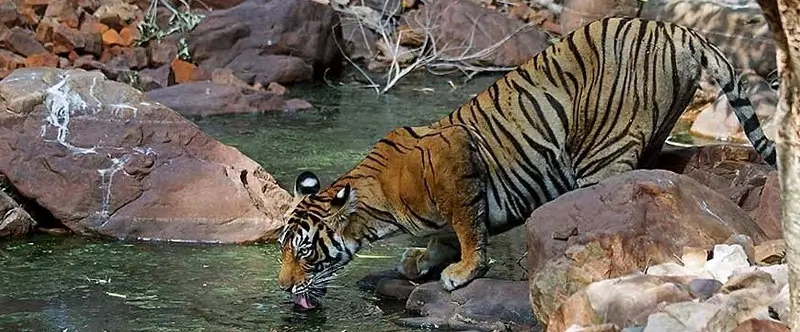
Ranthambore is often approached with a single emotion: anticipation. Travelers arrive alert, hopeful, and slightly tense, waiting for something extraordinary to appear from the forest. This mindset, shaped by wildlife narratives and safari culture, leaves little room for the subtler experiences that define the region just as deeply. Beyond the roar of engines and the excitement of sightings exists another Ranthambore—one that moves slowly, speaks softly, and reveals itself through everyday moments.
Horse safaris across open land, unstructured village walks, and evenings defined by stillness rather than schedules form the backbone of this softer side. These experiences do not compete for attention. They invite it gently. For travelers willing to release expectation, Ranthambore offers a version of itself that feels intimate, human, and quietly profound.
Most travel planning revolves around highlights. In Ranthambore, that usually means safaris, permits, and zones. Everything else becomes secondary. As a result, many travelers pass through the region without realizing how rich the surrounding landscape and lifestyle truly are.
The softer experiences require a different mindset. They do not deliver instant reward. There is no guarantee of drama or spectacle. What they offer instead is continuity—time spent within the rhythm of the land rather than racing across it. Travelers often overlook this simply because they are not trained to value it.
Once noticed, however, these quieter experiences tend to eclipse everything else.
Beyond wildlife safaris, discover slow travel experiences filled with nature walks, village life, organic farming, traditional flavors, and peaceful countryside moments near Ranthambore.
Chat On WhatsApp Contact UsHorse safaris near Ranthambore are not about thrill or speed. They are about movement that matches the land. Riding through open fields, forest edges, and rural paths on horseback changes how the body relates to space.
Unlike vehicles, horses respond to terrain intuitively. They slow where the land narrows, pause where scents linger, and move fluidly through uneven ground. Travelers riding at this pace often find their breathing synchronizing with movement. The mind quiets. Observation sharpens.
This form of exploration reconnects travelers with an older rhythm of travel—one that predates engines and urgency. The experience feels immersive without being intrusive, making it a cornerstone of slow travel in Ranthambore.
Being elevated yet exposed changes perspective. From horseback, the land feels expansive rather than distant. Details emerge naturally—textures of soil, variations in vegetation, subtle changes in light.
Travelers often report a heightened sense of awareness during horse safaris. Without the enclosure of a vehicle, sounds feel closer. Smells are sharper. The experience becomes sensory rather than observational.
This sensory engagement leaves a lasting imprint. Horse safaris are remembered not for what was seen, but for how it felt to move through the landscape without separation.
Village walks near Ranthambore offer an entirely different kind of intimacy. These walks are not curated tours. They unfold through lived spaces where daily routines continue uninterrupted.
Travelers encounter farmers tending fields, children playing, elders resting in shaded courtyards. These moments are not staged. They exist regardless of observation. Walking through villages allows travelers to witness coexistence rather than performance.
This proximity fosters understanding. Life near Ranthambore is shaped by adaptation—by living alongside forest, weather, and wildlife with patience rather than dominance. Observing this lifestyle provides cultural insight that no monument can replicate.
Village walks are most meaningful when unstructured. Without a checklist of sights, attention shifts naturally toward interaction and observation.
Travelers often notice small details they would otherwise miss—the rhythm of footsteps, the way conversations pause and resume, the presence of animals within human spaces. These details create a sense of belonging rather than intrusion.
Walking without agenda dissolves the boundary between visitor and environment. It allows experience to happen rather than be extracted.
Evenings in Ranthambore are often overshadowed by preparation for early safaris. Yet when evenings are allowed to unfold quietly, they become one of the most restorative parts of the day.
As light fades, activity slows. Sounds soften. The land exhales. Without scheduled entertainment, travelers find themselves sitting longer, speaking less, observing more.
Quiet evenings encourage reflection. Thoughts settle naturally. The day integrates rather than fragments. This calm prepares the body for rest that feels complete rather than interrupted.
For many travelers, stillness initially feels uncomfortable. Accustomed to stimulation, the absence of activity can trigger restlessness.
In Ranthambore’s softer moments, this restlessness gradually gives way to ease. Without demand, the mind stops searching for purpose. Presence becomes enough.
This transition marks a shift from consumption to participation. The traveler is no longer seeking experience; they are inside it.
Unplanned time carries emotional texture. Without structure, feelings surface naturally. Some travelers feel clarity. Others feel release. Many feel both.
These emotions are not imposed by experience. They emerge because the environment allows them. Ranthambore’s softer side provides emotional safety through predictability and calm.
This emotional depth often becomes the most memorable aspect of the journey.
Safaris offer intensity. Soft experiences offer balance.
Horse safaris, village walks, and quiet evenings provide contrast to the alertness required inside the forest. Together, they create a holistic travel experience.
Travelers who include both often describe feeling more fulfilled, less rushed, and more connected to the region as a whole.
Travel memories are shaped less by highlights and more by atmosphere. Years later, travelers may forget routes and zones, but they remember how evenings felt, how land moved beneath horseback, how villages breathed.
These memories persist because they are embodied rather than visual. They live in the body rather than in photographs.
First-time visitors often chase excitement. Repeat travelers seek resonance.
Those returning to Ranthambore frequently prioritize slower experiences. They already know what the forest can offer. Now they want to understand the region itself.
This shift marks a deeper relationship with place.
The softer side of Ranthambore redefines luxury. Luxury becomes time, space, and calm rather than access or exclusivity.
There is no need to impress. Comfort exists through ease rather than excess.
This understated luxury resonates strongly with travelers seeking meaningful journeys.
Enjoy relaxing countryside stays, authentic rural experiences, fresh farm meals, and peaceful moments surrounded by nature. Discover a slower and more meaningful way to explore Ranthambore with Maa Ashapura Farm.
Chat On WhatsApp Contact UsThis experience suits travelers willing to slow down, observe, and listen. It rewards patience and curiosity rather than urgency.
It is ideal for those feeling overstimulated, burned out, or disconnected from natural rhythm.
Ranthambore’s identity extends beyond wildlife. Its softer side reveals continuity, culture, and calm.
Horse safaris, village walks, and quiet evenings do not replace safaris. They complete the experience.
Travelers seeking depth, balance, and genuine connection.
Because they engage senses and emotions rather than expectation.
Yes, when guided and paced appropriately.
Yes, they encourage mental calm and emotional balance.
They complement safaris rather than replace them.
Yes, children often engage naturally with slow, open experiences.
Initial restlessness is common, but most travelers find them deeply restorative.
They are most meaningful when kept simple and unstructured.
It is a slow, guided ride through open land and rural paths that emphasizes connection rather than speed.
No, when done respectfully, they allow observation without disrupting daily life.
Stay close to nature at Maa Ashapura Farm – a
boutique retreat near Ranthambore National Park.
Enjoy wildlife safaris, Marwari horse experiences, yoga, nature walks, and
private dining.