
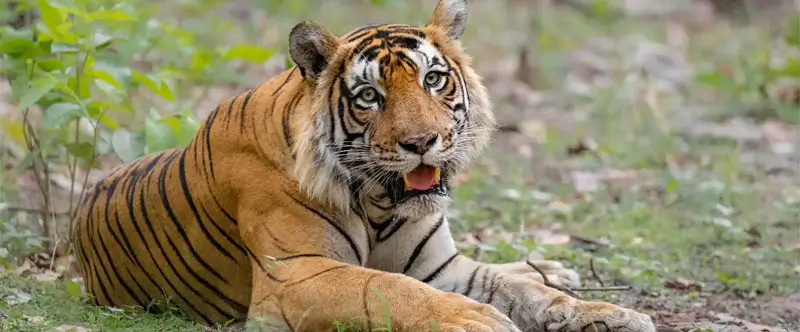
India offers some of the finest opportunities in the world to see Bengal tigers living freely in their natural habitat. Among the country's many protected forests, three names repeatedly appear when travellers start searching for a serious tiger safari: Ranthambore National Park, Jim Corbett National Park, and Bandhavgarh National Park.
Choosing between them is not as simple as asking which reserve has more tigers. A memorable wildlife trip depends on the landscape, safari system, accessibility, number of safari drives, season, photography opportunities, accommodation preferences and the type of holiday surrounding the actual forest visit.
Ranthambore vs Jim Corbett vs Bandhavgarh is therefore a comparison between three very different wildlife experiences. Ranthambore combines dry forests, lakes, ancient ruins and the dramatic presence of Ranthambore Fort. Corbett brings Himalayan foothills, rivers, dense sal forests, elephants and remarkable birdlife into the picture. Bandhavgarh offers an intense central Indian forest safari with core areas such as Tala, Magadhi and Khitauli attracting dedicated wildlife travellers.
A tiger sighting can never be guaranteed in any natural forest. Tigers move according to territory, prey, water, weather and disturbance rather than tourist schedules. The better question is: which tiger reserve in India suits the type of wildlife holiday you actually want?
Ranthambore National Park in Rajasthan has one of the most recognisable wildlife landscapes in India. Its character comes from the combination of dry deciduous woodland, rocky ridges, open grassland, lakes, old stone structures and the massive Ranthambore Fort overlooking sections of the forest.
This combination matters during a safari. A tiger walking beside a lake, crossing an open track or moving past an old stone structure creates a completely different visual experience from seeing the same animal inside dense vegetation. This is one reason Ranthambore tiger safari remains particularly attractive to photographers.
The reserve's tourism system is divided into multiple safari zones. Visitors commonly encounter references to Ranthambore Zones 1 to 10, although access, weekly closures and seasonal operations can change according to forest department rules. Safari vehicles generally include six-seat Gypsies and larger Canters. Government tourism information advises advance reservations because of the park's popularity.
Safari hours change with daylight. Typical seasonal schedules range from approximately 7:00 AM starts during the colder part of the season to around 6:00 AM during hotter months. Afternoon departures similarly shift from roughly 2:00 PM in shorter winter days to around 3:30 PM when daylight lasts longer. Visitors should always verify their reporting time against the permit because forest authorities can revise schedules.
Ranthambore is also practical for travellers who do not want an isolated wildlife trip. Sawai Madhopur railway station provides rail access, while Jaipur is a major gateway for road transfers. Rajasthan Tourism also notes rail connectivity from Delhi, Mumbai and Jaipur and road accessibility from Jaipur and Delhi.
This makes Ranthambore particularly convenient within a broader Rajasthan or North India itinerary. A traveller can combine architecture, food, heritage cities and wildlife without making the tiger safari feel like a separate expedition.
The wildlife extends well beyond the tiger. Leopards, sambar deer, spotted deer, nilgai, wild boar, crocodiles, langurs and a substantial range of birds contribute to the experience. Around lakes and water bodies, even periods without a tiger sighting can produce excellent wildlife observation.
The key advantage is visual variety. The Ranthambore safari experience can shift quickly from dry woodland to water, cliffs, grassland and historical remains. For travellers who want wildlife alongside Rajasthan's wider cultural character, Ranthambore is exceptionally well balanced.
Not every wildlife journey is the same. Whether you are drawn to Ranthambore’s dramatic landscapes, Corbett’s lush wilderness or Bandhavgarh’s intense tiger trails, the right stay can elevate the entire experience.
Jim Corbett National Park in Uttarakhand feels fundamentally different. Instead of Rajasthan's dry, rocky scenery, Corbett brings dense forests, river systems, grasslands and Himalayan foothill landscapes.
Established in 1936, Corbett is India's oldest national park. Uttarakhand Tourism describes the broader park landscape as covering 1,318.54 square kilometres, including a 520-square-kilometre main area with the remainder forming buffer landscape.
The habitat diversity gives Corbett enormous appeal even when a tiger remains hidden.
A Jim Corbett safari can involve sal forests, riverbeds, streams, grasslands and changing elevations. Asiatic elephants are a major attraction, while deer, otters, other mammals and extensive birdlife make the reserve particularly rewarding for visitors interested in biodiversity rather than one flagship species alone. Uttarakhand Tourism notes more than 650 species of resident and migratory birds.
Corbett's tourism structure also deserves attention because selecting the correct zone can significantly affect the character of the trip. Tourism zones listed by Uttarakhand Tourism include Bijrani, Jhirna, Dhikala, Durgadevi, Dhela, Garjiya, Sonanadi and Pakhro, each associated with its own entry gate.
Dhikala Zone has an especially strong reputation because of its large grasslands and remote forest atmosphere. Corbett also differs from many tiger reserves because certain forest accommodation options allow visitors to stay within designated areas of the protected landscape, subject to permits and operating rules.
Safari availability varies between zones and seasons. Some tourism zones close during parts of the monsoon while others may remain accessible according to prevailing regulations and conditions. Jeep safaris normally operate in morning and afternoon shifts, and safari duration is commonly around three hours for many day-visit routes.
For travellers starting from Delhi and other parts of northern India, Corbett's location near Ramnagar makes it an attractive road and rail destination. It also pairs naturally with Kumaon and Himalayan holidays.
However, the same vegetation that makes Corbett beautiful can make tiger observation challenging. Dense forest can hide a tiger only metres away. Visitors who judge a safari solely by tiger photographs may therefore miss what Corbett does exceptionally well: immersive forest scenery, elephants, birds, river habitats and the sense of entering a large Himalayan wilderness.
In the Corbett vs Ranthambore comparison, Corbett is often the stronger choice for travellers who place ecosystem diversity and a lush forest atmosphere above open-landscape photography.
Bandhavgarh National Park in Madhya Pradesh attracts travellers whose itinerary is built primarily around wildlife. Its tourism geography is centred around a set of core and buffer safari zones, and the forest has long held a strong reputation among serious tiger enthusiasts.
The three widely recognised core tourism zones are Tala, Magadhi and Khitauli. Buffer areas include Dhamokhar, Panpatha and Johila. A safari permit is tied to a particular zone, so a vehicle entering Tala cannot simply switch to Magadhi during the same drive.
This makes the choice of safari zone and number of drives particularly important.
A traveller visiting Bandhavgarh for only one safari is placing a large amount of expectation on a single forest session. A more satisfying Bandhavgarh tiger safari usually comes from allocating several drives across different zones when permits are available. Tiger territories change, individual animals move, and a zone that was active one morning can be quiet the following afternoon.
Bandhavgarh's safari duration is another attraction for committed wildlife visitors. Seasonal schedules published for the reserve show morning drives that can extend for several hours, with timings changing month by month. For example, indicative morning schedules can begin around 6:30 AM in colder months and around 5:30 AM during hotter months, while afternoon drives shift according to sunset.
The landscape combines forest, bamboo, meadows, rocky hills and historical elements associated with Bandhavgarh Fort. Although it does not provide the same Rajasthan heritage circuit surrounding Ranthambore or the Himalayan river scenery of Corbett, it delivers something else: a wildlife-centred rhythm.
Visitors often wake before sunrise, enter the forest for a long morning drive, return for rest, and head back for another afternoon safari. The safari itself becomes the central event rather than one activity within a broader sightseeing holiday.
For wildlife photographers, that focus can be highly attractive. Longer drives can mean more time observing animal behaviour, following alarm calls and waiting near areas showing signs of tiger movement.
Access requires more effort than Ranthambore for many travellers. Bandhavgarh does not have a major railway station directly beside its tourism hub comparable with Sawai Madhopur's relationship to Ranthambore. Travellers commonly approach through regional airports or railway stations and continue by road.
That extra travel time is worth considering. Someone with a short India itinerary may value Ranthambore's accessibility more, while a dedicated wildlife traveller may happily make the longer transfer for Bandhavgarh.
This is the question most travellers care about, but it requires a careful answer.
No ethical operator can guarantee a wild tiger.
A tiger sighting in India depends on the animal's movement, weather, prey activity, vegetation, water availability, safari route and simple chance. Even reserves famous for tigers can produce a completely quiet drive.
Bandhavgarh has a particularly strong reputation among tiger-focused wildlife travellers. Its core zones are frequently selected by photographers and repeat safari visitors who are willing to dedicate several drives to the forest.
Ranthambore can be exceptionally rewarding because parts of its habitat allow long-distance observation. A tiger emerging into an open section, sitting beside a water body or crossing a track may remain visible long enough for several vehicles to observe it under controlled conditions. The landscape can also produce memorable photographs because historical structures and lakes create unusually distinctive backgrounds.
Corbett has a substantial tiger population, but habitat structure can make sightings feel less predictable. Uttarakhand Tourism describes Corbett as being famous for a large number of tigers, yet the dense vegetation itself affects visibility.
The number of safaris booked is often more important than arguing over which reserve is theoretically "best." A traveller taking four or five drives at a good tiger reserve has more opportunities to encounter wildlife than someone expecting a single safari to deliver a perfect sighting.
For a dedicated tiger photography safari, Bandhavgarh deserves serious consideration. For a balance between tiger opportunities, dramatic photographic settings and convenient travel, Ranthambore is difficult to beat. For travellers who would enjoy elephants, birds, rivers and forest scenery even without seeing a tiger, Corbett remains a superb choice.
The finest wildlife journeys are thoughtfully planned from the first safari to the final evening. If Ranthambore is on your itinerary, make your stay equally memorable—with authentic surroundings.
Photography provides one of the clearest ways to separate these reserves.
Ranthambore produces bold compositions. Dry forest, lakes, rocky slopes, open ground, fort walls and stone ruins can all appear within the same safari landscape. The possibility of photographing a tiger against recognisable environmental features gives wildlife photography in Ranthambore a distinctive visual identity.
Corbett produces greener, more layered photographs. Riverbeds, tall grass, sal trees, misty mornings and elephants can create images that communicate habitat as strongly as the animal itself. Bird photographers also have an enormous range of subjects.
Bandhavgarh creates the classic central Indian jungle frame: bamboo, woodland tracks, meadows and dense vegetation broken by open sections. The longer morning safari schedules can be particularly valuable for photographers who prefer patiently working with changing light and animal behaviour.
Lens choice also matters. A telephoto lens in the 100–400 mm or 200–500 mm range is useful across all three reserves, while a second camera or wider lens can capture habitat, vehicles and landscape. A tiger can occasionally appear much closer than expected, making an extremely long fixed lens surprisingly restrictive.
Photography should never override safari etiquette. Blocking an animal's path, shouting to force it to look toward a camera, demanding that a driver chase an animal or creating noise around a sighting damages the experience for wildlife and visitors alike.
The best India tiger safari photograph is not merely a close tiger portrait. An image showing the animal naturally within its habitat often tells a much stronger story.
Accessibility can change the decision completely.
Ranthambore works exceptionally well for travellers already visiting Rajasthan, Delhi, Jaipur or Agra. Sawai Madhopur's railway connectivity and road links make the reserve relatively straightforward to integrate into a larger itinerary. Rajasthan Tourism specifically highlights rail access from Delhi, Mumbai and Jaipur.
Corbett is particularly convenient for North India road trips and holidays that combine wildlife with the Himalayan foothills. Ramnagar acts as the principal gateway for many visitors.
Bandhavgarh generally requires a more deliberate journey. That makes it highly attractive for wildlife-first travellers but potentially less convenient for someone with only a few free days.
For a two- or three-night break, accessibility matters enormously. Spending most of a short holiday in transfers reduces the time available for safari drives.
Ranthambore also fits naturally into combinations such as Delhi–Agra–Ranthambore–Jaipur. This is particularly useful for international visitors who want their India wildlife holiday to include architecture, culture and wildlife without excessive domestic transfers.
Corbett works well when the holiday includes Uttarakhand. Bandhavgarh works best when the forest itself is the principal reason for travelling or when it is combined with other central Indian wildlife destinations.
Choose Ranthambore National Park when you want a strong combination of tiger safari, photography, accessibility, Rajasthan heritage and a comfortable multi-day holiday. It is especially suitable for first-time safari visitors, couples, families, photographers and international travellers combining wildlife with North India's major destinations.
Choose Jim Corbett National Park when you value lush forests, rivers, elephants, birdlife and Himalayan scenery as much as tiger sightings. Corbett suits travellers who enjoy biodiversity and want the forest itself to remain interesting even during a tiger-free safari.
Choose Bandhavgarh National Park when the safari is the primary purpose of the journey. It particularly suits repeat wildlife travellers, photographers and visitors willing to spend several drives searching for tigers and observing animal behaviour.
There is no universal winner in Ranthambore vs Jim Corbett vs Bandhavgarh because each reserve succeeds in a different way.
For an all-round first tiger safari in India, Ranthambore offers one of the strongest combinations. Its accessibility, striking landscape, multiple safari zones, historical surroundings and wider Rajasthan setting make it easy to build a complete holiday rather than simply a series of forest drives.
For deep forest character and biodiversity, Corbett has an identity that neither of the other two can reproduce.
For travellers prepared to structure an entire trip around repeated wildlife drives, Bandhavgarh remains one of India's most compelling safari destinations.
The best choice is therefore the reserve whose landscape, accessibility and safari style match what you want to remember after the tiger disappears back into the forest.
Ranthambore generally suits travellers seeking open landscapes, tiger photography, Rajasthan heritage and convenient integration with Delhi, Jaipur and Agra. Jim Corbett is better suited to travellers who value dense forests, rivers, elephants, extensive birdlife and Himalayan scenery alongside tiger tracking.
Both are respected tiger destinations. Bandhavgarh tiger safari has a particularly strong reputation among dedicated wildlife travellers, while Ranthambore combines tiger opportunities with relatively open landscapes that can make sightings highly photogenic. No reserve can guarantee a tiger encounter.
Yes. Ranthambore National Park is particularly suitable for first-time wildlife visitors because it combines convenient access, organised safari tourism, varied accommodation and an impressive landscape with a strong tiger-safari reputation.
Three to five safari drives provide a much better wildlife experience than relying on a single drive. Visitors primarily interested in tiger photography may want additional drives, subject to permit availability and budget.
All three offer excellent photography but with different strengths. Ranthambore wildlife photography benefits from lakes, open areas and ruins; Corbett offers rivers, elephants, birds and lush forest; Bandhavgarh attracts photographers seeking intensive central Indian tiger safaris.
Ranthambore and Corbett are both practical from Delhi, depending on whether rail or road travel is preferred. Ranthambore benefits from Sawai Madhopur's railway connections, while Corbett is commonly approached through Ramnagar.
No. Tigers are wild animals moving freely through large territories. Safari zones, season, weather and recent animal movement can influence sightings, but tiger safari bookings never provide a legitimate guarantee of seeing a tiger.
Cooler months offer more comfortable temperatures, while hotter periods can increase wildlife activity around water sources and may offer strong tiger-photography opportunities. Safari access and timings differ by reserve and season, so current forest department rules should be checked before booking.
Ranthambore is an excellent family option because safari drives can be combined with a relaxed Rajasthan stay and relatively convenient transport. Corbett is also attractive for families interested in birds, elephants, rivers and forest scenery rather than focusing exclusively on tigers.
It is possible, but the distances make a three-reserve itinerary demanding. Travellers with limited time are usually better served by selecting one reserve and booking multiple safari drives. Dedicated wildlife travellers with a longer itinerary can combine reserves, allowing sufficient transfer and rest time between destinations.
Stay close to nature at Maa Ashapura Farm – a
boutique retreat near Ranthambore National Park.
Enjoy wildlife safaris, Marwari horse experiences, yoga, nature walks, and
private dining.