
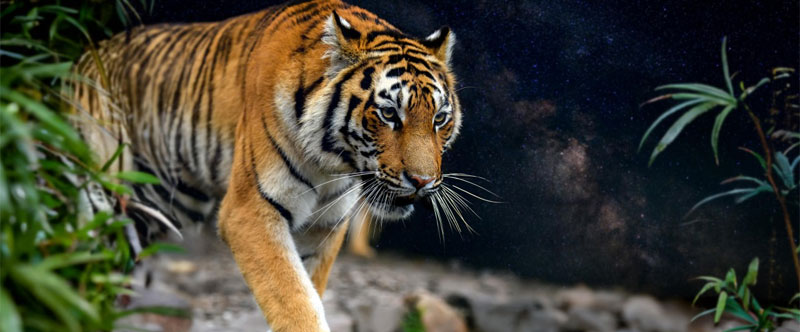
Noida to Ranthambore is one of the more practical wildlife journeys from Delhi NCR for travellers who want to exchange city traffic and high-rise neighbourhoods for Rajasthan's dry forests, lakes, rocky ridges and tiger habitat. The trip can be completed by private car, taxi or train, and each option works well for a different type of traveller.
The Noida to Ranthambore distance by road is approximately 380 to 420 kilometres, depending on your starting sector, the highway selected and the exact location of your accommodation near Sawai Madhopur. A realistic road journey generally requires around 7 to 9 hours once NCR traffic, food breaks and slower local sections are included.
Rail can be quicker for some travellers because several services from Delhi NCR operate toward Sawai Madhopur Railway Station (SWM), the main railway gateway for Ranthambore. Noida residents, however, usually need to travel to an appropriate Delhi railway station before boarding.
A private vehicle offers the greatest flexibility. Families can stop when required, photographers can carry equipment comfortably, and departure is not tied to a railway timetable. The trade-off is several hours behind the wheel.
The best Noida to Ranthambore trip is therefore not automatically the fastest or cheapest. It is the one that gets you to the destination with enough time to rest before your first forest safari.
The road distance from Noida varies because the city stretches across numerous sectors and has multiple connections toward Delhi, Greater Noida and the major outbound expressways.
A practical estimate of 380–420 kilometres covers most common journeys to the Ranthambore tourism area. Your navigation application may show a shorter or longer distance according to current routing.
Driving time deserves more attention than the raw kilometre figure.
Under favourable traffic conditions, the journey may be completed in around seven hours. With congestion, meal stops, construction or a busy holiday departure, Noida to Ranthambore travel time can approach eight or nine hours.
The first section can make a large difference.
Leaving Noida at 6:00 AM is very different from leaving at 9:30 AM. Early departure reduces the chance of losing significant time in Delhi NCR traffic and allows travellers to cover a large part of the journey before lunch.
For families, leaving early also creates a useful safety margin. A ten-minute washroom stop can easily become thirty minutes when children need food, and several such breaks accumulate over a 400-kilometre journey.
The final section around Sawai Madhopur can also take longer than expected. Hotels, resorts and farm stays are distributed across different roads around the Ranthambore tourism area.
Do not treat arrival in Sawai Madhopur town as arrival at your hotel.
If an afternoon Ranthambore safari is booked on the same day, this uncertainty becomes important. Forest entry operates according to fixed shifts and seasonal daylight. A delayed road transfer can result in a missed reporting time.
A far more comfortable schedule is to leave Noida in the morning, arrive during the afternoon, check in and take the first safari the following morning.
Leave the traffic, towers and constant rush behind. With the right departure time and a well-planned journey, Noida to Ranthambore becomes more than a long road trip—it becomes a complete change of pace.
The Noida to Ranthambore road route can be approached through different corridors depending on traffic and navigation conditions.
Travellers may move through Delhi NCR toward the faster highway network connecting with eastern Rajasthan, while some routes can direct vehicles through the Agra side before continuing toward Bharatpur, Dausa or other connecting roads toward Sawai Madhopur. Another routing may use the Delhi–Mumbai Expressway network depending on the starting location and current navigation recommendation.
The correct choice can change with traffic, roadworks and access conditions.
For this reason, live navigation on the morning of departure is more reliable than blindly following a route published months earlier.
Travellers starting from Greater Noida may receive a different recommendation from someone leaving Sector 62 or central Noida.
Regardless of the route, the journey should include at least one proper break.
Choose established highway restaurants and fuel stations rather than waiting until everyone is tired or hungry. Starting with a full fuel tank also reduces unnecessary detours.
If travelling in your own vehicle, check FASTag balance, tyre pressure, spare tyre, engine fluids and air conditioning before departure. These are basic details, but they matter on a long Rajasthan road journey.
During warmer months, a properly functioning AC system is essential. During winter, fog in parts of North India can affect early-morning visibility and journey time.
Driving aggressively to maintain a navigation estimate is never worthwhile. Smooth expressway sections can encourage high speeds, but fatigue becomes a genuine risk after several continuous hours.
A second competent driver is useful for a self-drive family trip.
If only one person drives, a longer meal or tea break after several hours is better than attempting to complete the entire Noida to Ranthambore road trip without rest.
Train travel can remove most of the physical fatigue associated with a seven- or eight-hour drive.
The destination to search for is Sawai Madhopur Railway Station, station code SWM.
Noida does not offer the same concentration of suitable Sawai Madhopur-bound services as major Delhi railway stations, so travellers generally need to reach the boarding station first.
Depending on the chosen service, relevant departures may operate from stations such as Hazrat Nizamuddin, New Delhi or other Delhi NCR terminals.
This means the railway journey should be calculated from your home, not merely from the train's departure station.
A Noida resident might spend an hour or more reaching the station, particularly during peak traffic. Passengers should also arrive sufficiently early for platform access and boarding.
Once aboard a suitable train, the Delhi-to-Sawai Madhopur rail portion can often take approximately 3½ to 6 hours, depending on the service. Slower trains take longer.
Train fares vary according to class, service and booking conditions.
For practical budgeting, basic reserved accommodation may cost a few hundred rupees, while AC Chair Car, AC 3 Tier or AC 2 Tier can range from several hundred rupees to ₹1,500–₹2,000 or more. Premium services and dynamic fares can be higher.
Live Indian Railways information should always be checked before booking because schedules, fares and operating days can change.
Rail is particularly attractive for solo travellers and couples. Even after adding the Noida-to-station transfer and the Sawai Madhopur station to hotel transfer, it can remain substantially cheaper than hiring a private vehicle.
For families with several suitcases, the convenience calculation changes. Moving luggage from home to a taxi, through a station, onto a train and then into another vehicle after arrival may make a private road transfer worth the additional cost.
A Noida to Ranthambore taxi offers door-to-door convenience and is one of the easiest options for families, groups and travellers carrying photography equipment.
Pricing varies according to vehicle category, pickup sector, tolls, one-way policy, driver allowance and demand.
For a conservative higher-side budget, a one-way sedan can be estimated at approximately ₹7,500–₹11,500. A larger SUV or MPV may cost around ₹10,500–₹16,000 or more.
Premium vehicles can cost considerably more.
These figures are budgeting estimates rather than fixed tariffs. Travellers should obtain a current written quotation before confirming the transfer.
Ask whether tolls, state taxes, parking and driver allowance are included. Some operators advertise a low per-kilometre rate but add these charges separately.
Also confirm whether the billing includes only the actual Noida-to-Ranthambore distance or whether the operator charges for the vehicle's return kilometres.
Vehicle selection should be practical.
A sedan is comfortable for two adults with moderate luggage. Four adults carrying large suitcases may need an SUV or MPV. Photographers with long telephoto lenses and hard cases should also select a larger vehicle even when only two or three passengers are travelling.
A private taxi has another important advantage: the driver handles the return journey after dropping you.
For self-driving travellers, the drive is only half finished. You still need to drive hundreds of kilometres back to Noida after the wildlife stay.
Hiring a driver can therefore make the return day considerably less tiring, especially after an early morning safari.
Driving your own vehicle may initially appear cheaper than hiring a taxi, but the complete Noida to Ranthambore driving cost includes fuel, tolls, local kilometres and vehicle wear.
A round trip can easily exceed 800 kilometres once hotel transfers and local driving are added.
Suppose a petrol vehicle returns around 12 kilometres per litre. An 800-kilometre journey would require roughly 67 litres of fuel. A heavier SUV returning around 9–10 kilometres per litre could require 80 litres or more.
At prevailing fuel prices, that means several thousand rupees in fuel alone.
Tolls need to be added according to the selected expressways and highways. Keeping a sufficient FASTag balance before departure prevents unnecessary problems at toll points.
Despite the cost, self-driving provides maximum freedom. Travellers can leave at their preferred time, stop for meals and carry as much luggage as the vehicle allows.
It also works well for a longer Rajasthan journey where Ranthambore is not the only destination.
A visitor could continue from Ranthambore toward Jaipur rather than immediately returning to Noida. In that situation, having a private vehicle becomes much more useful.
However, ordinary personal vehicles are not substitutes for authorised safari vehicles. Entry into designated tourism routes inside the reserve requires the appropriate Ranthambore safari vehicle and permit.
Your car will generally remain at the accommodation or designated parking area while you take the forest drive.
Safari timing should determine when you leave Noida.
Ranthambore generally operates morning and afternoon forest shifts, with exact times changing according to season and daylight.
During cooler periods, morning drives may begin around 7:00 AM. During hotter periods, entry can move closer to 6:00 AM. Afternoon shifts similarly change from roughly 2:00 PM in shorter winter days toward later starts as daylight increases.
Always use the reporting time associated with the actual permit rather than a generic online timetable.
If you reach the accommodation at 4:00 PM after an eight-hour road journey, taking a safari that same day is unlikely to be practical.
The next morning is much better.
Visitors staying two or three nights can take multiple Ranthambore tiger safaris, which is preferable to depending on one drive.
Tiger sightings cannot be guaranteed. Tigers move according to territory, prey, water, weather and natural behaviour.
A quiet first safari does not mean the trip has failed. Ranthambore also supports leopards, sambar, spotted deer, nilgai, wild boar, crocodiles, langurs and numerous bird species.
Taking another drive gives visitors a different section of forest, different light and another opportunity for wildlife movement.
For photography enthusiasts, two morning and one afternoon safari can provide an excellent mix when permits and schedule allow.
A rushed Saturday morning departure followed by a Sunday evening return is technically possible but leaves little time for the forest.
A stronger Ranthambore weekend from Noida begins with an early Friday departure.
Reach the property during Friday afternoon and keep the evening free. Eat early and sleep well because the following morning may begin before sunrise.
Saturday morning can be reserved for the first safari.
After returning, breakfast or lunch and a few hours of rest create enough energy for an optional afternoon safari.
Sunday can include another morning safari or a slower morning at the property. Travellers who need to be back in Noida that evening should begin the return journey by late morning or early afternoon rather than waiting until sunset.
An additional night makes the trip significantly more comfortable.
With three nights, there is time for multiple safaris without treating every hour as a deadline. Families especially benefit from this slower pace.
Wildlife photography also rewards patience. A visitor taking three drives has much more opportunity to observe animal behaviour than someone arriving with the expectation that a tiger must appear during a single three-hour session.
The objective should be to experience Ranthambore rather than simply prove that the journey from Noida was completed.
The purpose of the journey is not simply to cover 400 kilometres—it is to leave the city behind and immerse yourself in a completely different landscape. Travel with realistic timing, rest before your safari and discover the warmth, nature and calm of Maa Ashapura Farm.
Accommodation should be selected according to the kind of trip you want.
Some visitors prefer being close to Sawai Madhopur for railway access and local conveniences. Others prefer quieter properties outside the busy town environment, where the stay feels more connected to Rajasthan's rural landscape.
Check the actual location rather than relying solely on a property's use of the word "Ranthambore."
The distance from Sawai Madhopur Railway Station, safari pickup points and the main tourism roads can differ considerably.
Ask about safari transfer arrangements before arrival.
If travelling by train, confirm whether the property can arrange a station pickup. If travelling by private car, ask about secure parking.
Families may prioritise larger rooms, open spaces and dining flexibility. Couples may prefer privacy and quieter surroundings. Wildlife photographers need safe storage, early tea or breakfast arrangements and reliable assistance with safari reporting.
The accommodation should support the safari schedule rather than complicate it.
A good night's sleep before an early Ranthambore National Park safari is worth more than squeezing another late-night activity into the itinerary.
The appeal of this journey becomes clear when the safari begins.
After spending hours on NCR roads and Rajasthan highways, the next morning unfolds at a completely different pace. The vehicle enters dry forest where guides watch tracks for pugmarks and listen for alarm calls from deer and langurs.
A tiger may appear, but the forest does not become meaningless if it does not.
Ranthambore's lakes, old stone structures, rocky hills and open woodland create a strong landscape for wildlife observation. Sambar deer standing beside water, crocodiles resting near a lake and langurs watching from ruined walls can be as memorable as expected headline sightings.
This is what makes Noida to Ranthambore by road worthwhile.
It is close enough for a multi-night break without requiring a flight, yet different enough from Delhi NCR to feel like a complete change of environment.
Leave early, allow realistic travel time, arrive before your safari day and avoid building the trip around a single tiger sighting. Those decisions turn a long drive into a genuinely rewarding wildlife journey.
The Noida to Ranthambore distance by road is approximately 380–420 kilometres, depending on your starting sector, selected highway and accommodation location.
A realistic driving allowance is approximately 7–9 hours, including typical traffic and a reasonable break.
The best route depends on current traffic and road conditions. Highway options can connect through the Agra/eastern Rajasthan side or toward newer expressway corridors before continuing to Sawai Madhopur. Live navigation should be checked before departure.
Most Noida travellers use an appropriate Delhi NCR railway station and take a train to Sawai Madhopur Railway Station, which serves Ranthambore.
Suitable services can complete the railway portion in approximately 3½–6 hours, while slower trains take longer.
A practical higher-side budget is approximately ₹7,500–₹11,500 for a sedan and ₹10,500–₹16,000 or more for an SUV or MPV, subject to the operator and inclusions.
Yes. Two nights are possible, but three nights in Ranthambore provide a more comfortable trip with better scope for multiple safari drives.
Private cars cannot replace authorised safari vehicles on designated tourism routes. Visitors need the relevant permit and approved Gypsy or Canter safari arrangement.
Two or three drives are preferable when time and permits allow. Wildlife sightings are unpredictable, and multiple safaris provide different forest conditions and opportunities.
An early departure around 5:30–6:30 AM is practical for road travellers because it can reduce NCR traffic and provide a comfortable afternoon arrival before the following day's safari.
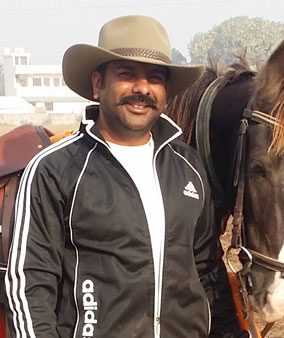
Stay close to nature at Maa Ashapura Farm – a
boutique retreat near Ranthambore National Park.
Enjoy wildlife safaris, Marwari horse experiences, yoga, nature walks, and
private dining.