
Ranthambore has always been a place of contrast. Wild forests exist beside human settlements. Ancient fort walls overlook modern safari routes. Silence inside the jungle contrasts sharply with the noise outside it. Travelers who come here for wildlife quickly realize that sound changes everything. The presence or absence of noise shapes how deeply one connects with the forest. This realization is driving a noticeable shift in where travelers choose to stay.
Traditional luxury resorts were built to impress through scale, activity, and constant stimulation. Large lobbies, entertainment programs, loud common areas, and busy dining halls were once considered symbols of premium hospitality. In Ranthambore, however, this model increasingly feels misplaced. Travelers are now seeking silent resorts in Ranthambore that respect the natural rhythm of the landscape rather than overpower it.
Noise affects more than comfort. It influences sleep quality, emotional calm, and even the safari experience itself. Safari schedules require early mornings and physical endurance. Guests who spend their evenings in noisy resort environments often feel disconnected and fatigued. Silent resorts offer an alternative where rest becomes intentional rather than accidental.
The concept of quiet luxury is not about removing comfort. It is about refining it. Luxury without noise prioritizes space, thoughtful design, and minimal disturbance. Instead of filling silence with entertainment, these resorts preserve it. This approach aligns naturally with the purpose of visiting Ranthambore.
Wildlife tourism demands sensitivity. Animals respond to sound. Forest ecosystems thrive in balance. Travelers staying in peaceful resorts near Ranthambore National Park begin to understand that silence is not emptiness; it is presence. The absence of noise allows birds to be heard, winds to be felt, and evenings to slow naturally.
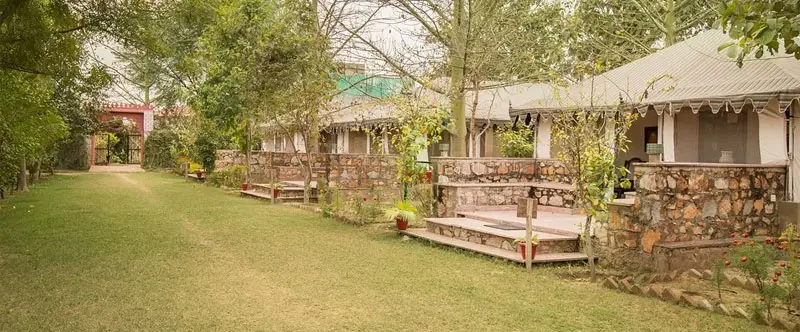
Silent resorts are typically designed on smaller scales. Limited rooms ensure lower foot traffic. Open layouts replace enclosed corridors. Outdoor seating areas are spaced generously. These design choices are intentional, not accidental. They support a quieter atmosphere without compromising comfort.
Privacy is another defining factor. Large resorts often host multiple groups simultaneously. Conversations overlap, children play loudly, music carries across spaces. Silent resorts curate an environment where guests can enjoy solitude even in shared spaces. This balance is difficult to achieve at scale.
The evolution of traveler expectations also plays a role. Modern travelers are increasingly aware of mental health and well-being. Vacations are no longer seen only as entertainment breaks. They are restorative experiences. Quiet luxury resorts in Ranthambore support this shift by offering environments that calm rather than stimulate.
Food and dining experiences change in silent resorts as well. Without the pressure of serving hundreds of guests at once, meals become slower and more personal. Guests dine without background noise, loud music, or crowded halls. This transforms dining into an experience rather than a routine.
Silent resorts also foster stronger host-guest relationships. Staff are not stretched across massive operations. Interactions feel human rather than procedural. Travelers appreciate this attentiveness, especially when planning safaris, adjusting schedules, or seeking local insights.
Another important aspect is environmental alignment. Noise pollution affects wildlife beyond park boundaries. Resorts that consciously reduce noise contribute indirectly to conservation efforts. Travelers who choose eco-sensitive resorts in Ranthambore recognize this responsibility.
For couples, silence enhances intimacy. Conversations deepen when not interrupted by background noise. Evenings feel longer. Mornings begin gently. Romantic silent resorts in Ranthambore cater to this desire for shared stillness rather than staged experiences.
Families also benefit. Children experience a different form of engagement. They observe nature, listen to sounds, and adapt to slower rhythms. Parents value the calm environment that supports rest and meaningful family time.
Senior travelers are among the strongest advocates of silent stays. Physical comfort is closely tied to mental calm. Quiet environments reduce stress and fatigue. Senior-friendly resorts in Ranthambore increasingly focus on silence as a core feature.
Wildlife photographers and researchers are particularly sensitive to noise. Early mornings, long waits, and intense focus require mental clarity. Silent resorts provide an environment that supports preparation and recovery. The absence of noise allows photographers to review sightings, plan shots, and rest effectively.
Another factor influencing this shift is digital overload. Travelers are constantly exposed to notifications, screens, and schedules. Silent resorts naturally encourage disconnection without enforcing rules. The environment itself invites stillness.
Design aesthetics in silent resorts also differ. Architecture blends with the landscape rather than dominating it. Materials are chosen for natural insulation. Lighting is subtle. All these elements reduce sensory overload.
The future of Ranthambore tourism lies in balance. Visitors want access without intrusion. Comfort without chaos. Luxury without excess. Silent resorts near Ranthambore embody this balance.
As awareness grows, travelers begin searching differently. Queries shift from generic luxury to terms like peaceful resort in Ranthambore, quiet stay near Ranthambore National Park, and nature-focused resort Ranthambore. These searches reflect a deeper understanding of what enhances the wildlife experience.
Tourism authorities and local communities also benefit from this shift. Smaller, quieter resorts place less strain on infrastructure and resources. They integrate more naturally with surrounding villages and landscapes.
Importantly, silence does not mean isolation. Silent resorts still offer guided safaris, nature walks, village interactions, and cultural experiences. The difference lies in pacing. Experiences unfold naturally rather than being scheduled aggressively.
Guests often describe silent stays as transformative. They remember mornings, not just sightings. They recall conversations, not just amenities. This emotional imprint leads to repeat visits and strong recommendations.
As Ranthambore continues to evolve as a destination, silent resorts will increasingly define its premium segment. Travelers who understand the value of quiet will shape future demand. Resorts that adapt to this mindset will remain relevant.
Luxury without noise is not a trend. It is a response to overexposure, overdevelopment, and overstimulation. In a destination built around wilderness, silence is not optional. It is essential.
Frequently Asked Questions
What is a silent resort in Ranthambore?
A silent resort prioritizes calm surroundings, minimal noise, limited occupancy, and a peaceful atmosphere aligned with nature.
Are silent resorts considered luxury stays?
Yes, modern luxury focuses on privacy, comfort, space, and well-being rather than scale and noise.
Do silent resorts still offer safari services?
Yes, they coordinate safari bookings and logistics while maintaining a calm environment.
Are silent resorts suitable for families with children?
Yes, many families prefer quieter environments that encourage rest and nature connection.
Do silent resorts provide dining facilities?
Dining is usually personalized, calm, and focused on quality rather than volume.
Why is silence important for wildlife tourism?
Silence enhances mental focus, rest, and alignment with natural surroundings.
Are silent resorts eco-friendly?
Most silent resorts operate on smaller scales with lower environmental impact.
Do silent resorts cost more than large resorts?
Pricing varies, but value comes from experience quality rather than size.
Are silent resorts good for photographers?
Yes, they support early mornings, rest, and focus needed for photography.
Why are travelers shifting toward silent resorts in Ranthambore?
Travelers seek peace, authenticity, and deeper connection with nature.

Stay close to nature at Maa Ashapura Farm – a
boutique retreat near Ranthambore National Park.
Enjoy wildlife safaris, Marwari horse experiences, yoga, nature walks, and
private dining.