
Kota and Ranthambore are close enough to combine comfortably without losing an entire day to travel. For residents of Kota, students with visiting families, business travellers extending a Rajasthan trip, or tourists moving through the Hadoti region, Ranthambore offers a dramatic change of setting within a few hours.
The Kota to Ranthambore distance by road is approximately 140 to 160 kilometres, depending on the exact starting point in Kota, road conditions and the location of the accommodation around Sawai Madhopur. Under normal conditions, a private car usually requires around 3 to 4 hours.
Rail is often even more attractive. Kota Junction and Sawai Madhopur both sit on one of India's important railway corridors, and numerous trains travel between the two stations. Depending on the service, the Kota to Sawai Madhopur train journey can take approximately 1½ to 3 hours, making rail a practical option for travellers who do not need a private vehicle at the destination.
A taxi offers the greatest flexibility and is particularly useful for families, groups and visitors carrying substantial luggage. Because the road distance is relatively modest, private transport is considerably more affordable than on longer routes such as Delhi NCR or Udaipur to Ranthambore.
The main decision should be based on safari timing. Ranthambore's forest drives operate in fixed morning and afternoon shifts. A two-hour delay that seems minor on an ordinary holiday can result in missing a safari permit. The transfer from Kota should therefore be arranged around the forest schedule rather than the other way around.
Kota to Ranthambore Distance and Actual Travel Time
The distance from Kota to Ranthambore is roughly 140–160 kilometres by road. The exact figure changes according to where the journey begins in Kota and where it ends around Ranthambore.
A traveller leaving from central Kota may receive a different navigation estimate from someone starting on the outskirts. Similarly, reaching Sawai Madhopur town is not necessarily the end of the journey because resorts and farm stays are distributed across the wider tourism area.
A realistic driving allowance is 3 to 4 hours.
Under favourable conditions, the journey may be completed more quickly. However, visitors should not build a fixed safari schedule around the fastest possible navigation estimate. Local traffic, roadworks, village sections, weather and food stops can increase the journey time.
The relatively short distance creates one major advantage: travellers can leave Kota in the morning and reach Ranthambore comfortably before lunch.
For example, departing around 7:00 AM could place visitors at their accommodation by late morning under normal conditions. This leaves enough time for check-in, lunch and rest before an afternoon activity.
A same-day afternoon Ranthambore tiger safari may therefore be possible from Kota, provided the traveller leaves early and has already confirmed the safari reporting arrangements.
Even then, a safety margin is important.
If the afternoon safari requires reporting around 1:30 or 2:00 PM during a particular season, arriving at the hotel at 1:45 PM is not sufficient. Pickup procedures, identification checks and the journey to the relevant boarding point require time.
For a completely stress-free trip, arrive the previous evening or keep the first safari for the following morning.
The return journey is equally convenient. Visitors can take a morning safari, return for breakfast or lunch and then drive back to Kota during the afternoon.
This makes Kota to Ranthambore by road one of the more practical short wildlife trips in Rajasthan.
Just a few hours from Kota, Ranthambore offers a complete change of pace—from the city to open landscapes, forests and wildlife.
Kota to Ranthambore Road Route and Driving Conditions
The road journey typically heads from Kota toward the Sawai Madhopur region through the most suitable state and national road connections available on the travel day.
Route applications may suggest different roads according to current traffic and construction. Travellers should therefore use live navigation instead of relying on an old turn-by-turn description.
One commonly used corridor connects the Kota side toward Sawai Madhopur through the Bundi/Indragarh side or other regional connections, depending on the exact origin and road conditions. The final route should be confirmed immediately before departure.
Unlike a 400-kilometre road trip, the Kota to Ranthambore route does not require elaborate stopover arrangements.
Most travellers can comfortably complete the journey with one short tea, breakfast or washroom break.
Starting with sufficient fuel is still sensible. Self-driving visitors should check tyre pressure and FASTag balance where relevant, although the journey is much less demanding than longer interstate transfers.
Road conditions can change during the monsoon. Heavy rain can slow local sections, while construction or diversions may temporarily alter the fastest route.
Night driving should be approached carefully, especially on roads passing through smaller settlements. Unlit vehicles, animals and local traffic can make regional roads more demanding after dark.
A daytime transfer is preferable for visitors unfamiliar with the route.
The short journey also makes hiring a private driver attractive. Travellers can leave after breakfast without worrying about railway schedules and reach their accommodation directly.
For families travelling with elderly passengers, children or several bags, this convenience can outweigh the modest additional cost compared with train travel.
Kota to Ranthambore by Train
Rail is one of the strongest transport options between the two destinations.
The relevant stations are Kota Junction (KOTA) and Sawai Madhopur Junction (SWM).
Both stations are situated on a major railway corridor, which means travellers often have several service choices across the day. Express, Superfast and other long-distance trains operating through Rajasthan frequently stop at both stations.
Depending on the selected service, the Kota to Sawai Madhopur train time is generally around 1½ to 3 hours. Some services may be faster, while slower trains can take longer.
This is significantly quicker than the road journey in many cases.
Ticket pricing depends on the train and travel class.
For such a relatively short rail sector, basic reserved tickets can cost only a few hundred rupees. Sleeper fares may be around ₹150–₹300, while air-conditioned classes can commonly fall in the approximate ₹400–₹1,000+ range depending on service, class, quota and booking conditions.
Premium services or higher classes can cost more.
These are practical fare ranges rather than fixed prices. Travellers should check current Indian Railways availability and the final payable fare for their selected train.
The train's main advantage is efficiency.
A couple can leave Kota, sit comfortably for a few hours and arrive directly at Sawai Madhopur without dealing with road traffic. For solo travellers, the cost difference compared with a private taxi is substantial.
The disadvantage is the transfer at both ends.
Travellers need transport to Kota Junction and then another vehicle from Sawai Madhopur Railway Station to the Ranthambore accommodation.
If the property is some distance outside town, this final transfer needs to be arranged in advance.
Train delays should also be considered before a same-day safari. Even a train scheduled to arrive several hours before forest reporting can occasionally run late.
For this reason, avoid choosing a railway service with a narrow gap between scheduled arrival and safari entry.
Private Taxi from Kota to Ranthambore: Cost and Convenience
A Kota to Ranthambore taxi is an excellent option because the road distance is short enough to keep the fare manageable.
For budgeting on the comfortable higher side, a one-way sedan can generally be allowed approximately ₹3,500–₹5,500, while an SUV or MPV may cost around ₹5,000–₹8,000 or more, depending on vehicle category, pickup location, tolls and operator policy.
Luxury vehicles or last-minute holiday bookings may cost more.
Round-trip packages can be attractive for Kota residents spending one or two nights in Ranthambore. However, travellers should compare the complete quotation rather than the advertised per-kilometre rate.
Ask whether the amount includes driver allowance, tolls, parking and applicable taxes.
Some taxi operators apply a minimum daily kilometre charge even when the actual distance is lower. Others calculate the vehicle's return kilometres even for a one-way drop.
An all-inclusive written quotation avoids confusion.
A sedan is normally adequate for two or three travellers with ordinary luggage. An SUV or MPV becomes more comfortable for four or more adults, families with several bags or wildlife photographers carrying camera equipment.
Door-to-door service is the main advantage.
There is no need to leave the hotel early for a railway station or arrange another transfer after reaching Sawai Madhopur.
This can be particularly useful when travelling with children.
A private vehicle also makes it easier to reach accommodation situated outside the busiest parts of Sawai Madhopur.
For a group of four, dividing a ₹6,000 SUV transfer across the passengers can make the cost reasonable compared with the additional comfort provided.
Can Kota to Ranthambore Be Done as a Day Trip?
Technically, yes. Practically, staying overnight is much better.
The relatively short Kota to Ranthambore travel time means a visitor could leave Kota very early, take an afternoon safari and return late at night.
However, this creates a long day and leaves no protection against road delays.
A morning safari is even more difficult as a same-day departure from Kota because forest entry can begin around sunrise. Travellers would need to leave Kota in the middle of the night, drive for several hours and enter the forest immediately.
That is not an ideal start to a wildlife experience.
One overnight stay changes the trip substantially.
Arrive in Ranthambore during the afternoon, eat well, sleep and take the morning safari with enough energy to enjoy it.
Two nights are better still.
A two-night visit can include a morning and afternoon safari on the central day, or one safari on each morning. This provides more opportunities to observe wildlife without creating an exhausting schedule.
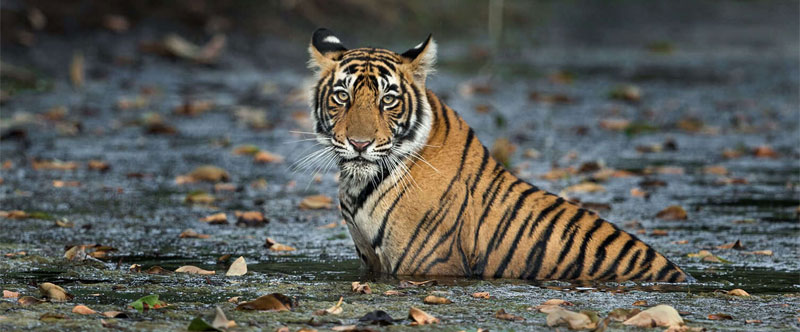
Tiger sightings are never guaranteed. A Ranthambore National Park safari may produce a tiger encounter, but it can also focus on sambar deer, spotted deer, crocodiles, langurs, wild boar, nilgai and birdlife.
Taking two drives provides a much broader forest experience than depending on one three-hour session.
For Kota residents, the short distance makes repeat visits realistic as well. There is no need to force every possible activity into one weekend.
Safari Timings and How They Affect Your Departure from Kota
Ranthambore generally operates two safari shifts: morning and afternoon.
Exact timings change according to daylight and season.
During colder months, morning entry can be around 7:00 AM, with the drive ending around 10:30 AM. As days become warmer and sunrise moves earlier, entry may shift toward 6:00 AM.
Afternoon entry can be around 2:00 PM during shorter winter days and move toward approximately 3:30 PM when daylight lasts longer.
These are indicative timings. Visitors must follow the reporting details associated with their actual permit.
For a same-day afternoon safari from Kota, leaving early in the morning provides the safest margin.
Do not leave Kota at 10:30 AM merely because navigation predicts a three-hour drive and the safari begins around 2:30 PM. A single delay can destroy the schedule.
Aim to reach your accommodation several hours before reporting.
For a morning safari, arrive in Ranthambore the previous evening.
Safari permits should also be booked before arranging the trip during popular travel periods. Ranthambore Gypsy safari capacity is limited, and smaller vehicles can sell out.
Canters provide another option where available. They carry more visitors and are generally more economical.
Neither vehicle guarantees tiger sightings. The permit, zone, natural animal movement and chance remain more important than the size of the vehicle.
A Practical Two-Night Trip from Kota
A comfortable short trip can begin with a morning departure from Kota.
Reach Ranthambore before lunch, check in and keep the first afternoon relaxed. Travellers with a confirmed permit and sufficient arrival margin can take an afternoon safari, but it is not necessary to fill the first day.
The following morning is ideal for a Ranthambore wildlife safari.
After the drive, return for breakfast and rest during the middle of the day. An afternoon safari can then provide a second forest experience with different light and temperatures.
The next morning can remain free for a relaxed breakfast before returning to Kota.
This itinerary works particularly well for families because it does not require constant movement.
Photographers may prefer adding a third safari if permits are available. Morning light can produce beautiful conditions around lakes and open forest, while late afternoon can create warm light across dry woodland and rocky terrain.
Visitors should keep expectations realistic.
The tiger is the most famous animal in Ranthambore, but focusing exclusively on one species can cause travellers to overlook much of what makes the reserve interesting.
Watch sambar behaviour. Listen when langurs make repeated alarm calls. Notice how spotted deer suddenly stop feeding and stare into the vegetation. These signals are part of the actual safari experience.
For families and groups, a private taxi from Kota offers door-to-door convenience without railway connections or additional transfers.
Choosing Accommodation for a Short Ranthambore Visit
A short trip makes accommodation location particularly important.
If arriving by train, check the distance from Sawai Madhopur Junction and confirm station pickup before departure.
Road travellers have more flexibility because a private car can take them directly to properties outside the main town.
Visitors looking for a quieter experience may prefer accommodation in the countryside surrounding Ranthambore rather than the busiest urban sections.
Families should check room size, meal arrangements and early breakfast availability. Morning safaris can require leaving before normal restaurant hours.
Wildlife photographers may need secure storage for equipment and enough space to prepare cameras before departure.
Also ask how safari transfers work.
Depending on the permit and booking arrangement, vehicle pickup procedures can differ. Do not assume that every safari vehicle automatically collects every guest directly from every property.
Knowing the reporting process the night before prevents confusion at sunrise.
A short Kota to Ranthambore weekend trip works best when accommodation supports the forest schedule instead of creating additional transfers.
Why the Short Distance Makes Ranthambore Especially Practical from Kota
For Kota travellers, the biggest advantage is simple: very little time is lost reaching the destination.
Visitors from Delhi NCR, Ahmedabad or Udaipur may spend most of a day travelling. From Kota, the road journey can be completed in a few hours and the rail journey can be shorter still.
That means more of the weekend can be spent at the destination.
The landscape also changes dramatically despite the relatively modest distance.
Kota's urban environment and Chambal-region character give way to the forests, rocky ridges, lakes and historical structures associated with Ranthambore.
A two-night trip can therefore feel far removed from an ordinary weekend without requiring flights or a full week away.
The combination of short travel time to Ranthambore, frequent railway connectivity and affordable road transfers makes Kota one of the most convenient starting points for the reserve.
Allow enough time for the forest, arrive before your safari rather than racing toward it, and let the wildlife dictate the pace once the safari vehicle passes through the gate.
The Kota to Ranthambore distance by road is approximately 140–160 kilometres, depending on the route and exact accommodation location.
A realistic road journey generally requires around 3–4 hours, although traffic, road conditions and stops can increase the travel time.
Yes. Numerous trains operate between Kota Junction and Sawai Madhopur Junction, although individual services and operating days should be checked before travel.
Depending on the selected service, the rail journey commonly takes approximately 1½–3 hours.
A practical higher-side budget is around ₹3,500–₹5,500 for a sedan and approximately ₹5,000–₹8,000 or more for an SUV or MPV.
Sawai Madhopur Railway Station (SWM) is the principal rail gateway for travellers visiting Ranthambore National Park.
A day trip is technically possible, especially for an afternoon safari, but an overnight stay is much more comfortable and reduces the risk of missing the forest reporting time.
An early-morning departure is safest. Aim to reach the Ranthambore area several hours before the reporting time rather than relying on the minimum driving estimate.
One night can work for a short visit, but two nights in Ranthambore provide a better opportunity for multiple safari drives and a more relaxed stay.
Train is usually faster and cheaper for solo travellers and couples. A private Kota to Ranthambore taxi provides greater convenience for families, groups and visitors carrying substantial luggage.
Stay close to nature at Maa Ashapura Farm – a
boutique retreat near Ranthambore National Park.
Enjoy wildlife safaris, Marwari horse experiences, yoga, nature walks, and
private dining.