
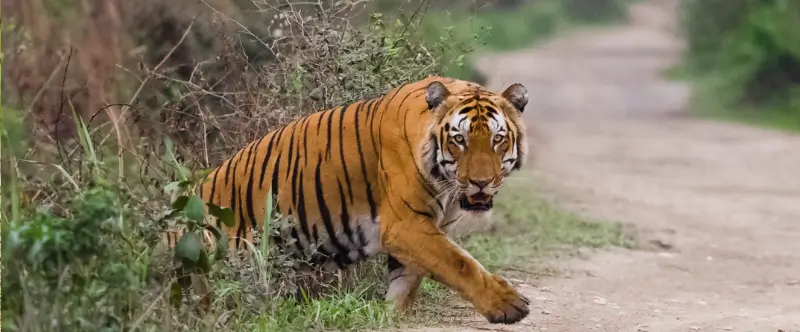
Travelling from Kerala to Ranthambore is one of the longer domestic journeys for visitors heading to Rajasthan's famous tiger landscape. Kerala stretches across a large part of India's southwestern coast, so there is no single fixed Kerala to Ranthambore distance or travel time. A traveller leaving Kochi faces a different journey from someone starting in Thiruvananthapuram, Kozhikode or Kannur. For that reason, the departure city matters before comparing flights, trains and road routes.
For most travellers, flying to Jaipur and continuing to Ranthambore by private road transfer is the fastest practical choice. Long-distance trains can provide considerably lower fares and have the important advantage of reaching Sawai Madhopur Junction (SWM), the railway gateway for Ranthambore. Driving from Kerala is possible, but the distance is so substantial that the road journey should be treated as a multi-day interstate trip rather than a simple transfer.
From Kochi, the road distance to Ranthambore can be approximately 2,000 to 2,200 kilometres, depending on the route. From Thiruvananthapuram, the journey can extend to roughly 2,200 to 2,400 kilometres, while travellers starting farther north in Kerala may have a somewhat shorter road distance. Actual driving can require well over 35 hours, before overnight rest and meal stops are added.
Ranthambore does not have a regular commercial airport. The practical aviation gateway is generally Jaipur International Airport, approximately 170–190 kilometres from the Ranthambore area. Travellers therefore need to evaluate the complete journey rather than looking only at the flight duration.
A trip covering this much distance deserves enough time at the destination. Reaching Rajasthan from Kerala, taking one safari and immediately beginning the return journey provides poor value. Three nights should be considered a practical minimum for most visitors, while four nights work better for travellers whose main interest is wildlife.
Because Kerala is a state rather than a single departure point, any article giving one exact Kerala to Ranthambore road distance can be misleading. The practical figure changes substantially according to the city.
From Kochi to Ranthambore, road distance can be approximately 2,000–2,200 kilometres, depending on current routing. Continuous driving time can exceed 35 hours, and a comfortable road journey requires multiple days.
From Thiruvananthapuram to Ranthambore, travellers should expect a longer journey of roughly 2,200–2,400 kilometres by road. Actual route selection can change the figure, and urban traffic at the beginning of the journey must also be considered.
From Kozhikode to Ranthambore, the distance can be approximately 1,900–2,100 kilometres, depending on the route. Kannur and other northern Kerala origins may reduce the distance further, although the journey remains extremely long for a direct road transfer.
These figures should be used as realistic ranges rather than fixed navigation measurements.
The same principle applies to travel time. A navigation application may show a continuous driving figure, but nobody should build a leisure itinerary around driving for more than 30 hours without proper overnight rest.
A sensible Kerala to Ranthambore road trip requires at least two overnight halts and can easily occupy three full days each way. This is why flying or rail is more practical for visitors whose main purpose is a Ranthambore wildlife holiday.
The starting city also determines the best airport and railway station. Kochi travellers will usually use Cochin International Airport or Ernakulam-area railway stations, while visitors from Thiruvananthapuram and northern Kerala will naturally use different transport hubs.
Travelling all the way from Kerala to Ranthambore deserves more than just a quick visit. Stay close to the wilderness, enjoy thoughtfully planned safari experiences and relax in a peaceful boutique retreat surrounded by nature.
For most travellers, flying is the fastest way to cover the enormous distance between Kerala and Rajasthan.
The practical route is to fly from a major Kerala airport to Jaipur International Airport and then travel by private car to Ranthambore. Depending on the departure city and airline schedule, flights may be nonstop or require a connection.
From Kochi to Jaipur, a nonstop flight, when available, can take roughly 3 to 3½ hours. Connecting itineraries can require five, six or considerably more hours depending on the layover.
From Thiruvananthapuram to Jaipur, suitable journeys may involve a connection depending on the operating schedule. Travellers should compare total duration rather than selecting a fare solely because it appears cheaper.
Flights from Kozhikode or Kannur to Jaipur may similarly involve connections according to the travel date.
The complete Kerala to Ranthambore flight journey does not end at Jaipur Airport. After landing, passengers need to collect luggage and continue approximately 170–190 kilometres by road.
The Jaipur-to-Ranthambore drive generally requires around 3½–4½ hours. Therefore, a well-timed air journey from Kochi can still require approximately 9–11 hours door to door, while connecting flights from other Kerala cities can push the total higher.
For travellers with only five or six days available, this time saving is extremely valuable. Instead of spending more than a day and a half on a train, visitors can reach Ranthambore on the same day they leave Kerala when flight timings cooperate.
Airfares between Kerala and Jaipur fluctuate significantly according to departure city, airline, demand and how early the booking is made.
For practical budgeting, a one-way Kochi to Jaipur flight can sometimes fall around ₹5,500–₹9,000, while weekends, holiday periods and short-notice bookings can push fares toward ₹10,000–₹18,000 or more.
Flights from Thiruvananthapuram, Kozhikode or Kannur may fall into similar or higher ranges when a connection is required.
These prices should be treated as budgeting estimates rather than fixed fares.
The mistake is comparing only the airline ticket with a railway fare.
A flight-based journey also includes transport to the Kerala airport, possible baggage charges, food during the journey and the Jaipur Airport to Ranthambore taxi.
For a private sedan from Jaipur Airport to Ranthambore, a practical higher-side budget is approximately ₹4,500–₹7,000. An SUV or MPV can cost around ₹6,000–₹9,000 or more, depending on operator, vehicle category and hotel location.
For a family of four, the airport transfer can be divided across the group, but four airline tickets still make flying considerably more expensive than rail.
The value comes from time saved. Travellers should therefore compare the additional cost against the extra day or more that long-distance rail can consume.
Train travel is much slower than flying, but it has two important advantages: lower cost and direct access to Sawai Madhopur when a suitable service is available.
The station required for Ranthambore is Sawai Madhopur Junction (SWM).
Travellers from Kochi should search from relevant Ernakulam-area stations. Those starting in Thiruvananthapuram, Kozhikode or Kannur should check services from their nearest major railway station and compare direct trains with suitable connections.
Long-distance trains from Kerala heading toward Delhi, Rajasthan or northern India may pass through Sawai Madhopur, depending on the service and route.
A Kerala to Sawai Madhopur train journey can easily require approximately 35 to 45 hours or more, depending on the departure city and train. Services requiring a connection can take longer.
For a journey approaching two days, travel class becomes extremely important.
Sleeper Class provides the lowest reserved fare but may feel demanding over such a long distance. AC 3 Tier offers a better balance between price and comfort for many passengers. AC 2 Tier provides more space and fewer passengers, while First AC can provide substantially greater privacy where available.
For broad budgeting, Sleeper fares can fall around ₹800–₹1,300, AC 3 Tier around ₹2,000–₹3,200, and AC 2 Tier around ₹3,000–₹4,800 or more. First AC and premium train categories can be substantially higher.
The actual railway fare should always be checked for the selected service, quota and travel date.
The strongest feature of train travel is that passengers can arrive directly at Sawai Madhopur, rather than landing hundreds of kilometres away.
Once the train arrives, only the local hotel transfer remains.
Accommodation around Ranthambore is distributed across Sawai Madhopur and the surrounding countryside, so the station-to-property journey can take approximately 15 to 45 minutes or more.
A private local transfer can be budgeted at around ₹700–₹1,500 or more, depending on the vehicle and distance. Premium resorts and properties farther from town may quote higher pickup charges.
Visitors should arrange this transfer before beginning the long railway journey from Kerala, especially when the scheduled arrival is late at night.
The train's arrival time should also not be placed too close to the first safari.
A service travelling for more than 35 hours can accumulate delays. Scheduling a Ranthambore safari two hours after the train's scheduled arrival creates unnecessary risk.
Keep the arrival day free whenever possible.
After nearly two days on a train, a proper shower, meal and night's sleep will improve the forest experience considerably.
Driving from Kerala to Ranthambore is a completely different type of journey from flying or taking a train. It should only be selected when the road trip itself is part of the holiday.
The Kerala to Ranthambore road trip distance can exceed 2,000 kilometres from many starting points. Depending on the route, travellers may cross Karnataka, Maharashtra, Madhya Pradesh and Rajasthan, or use alternative corridors through western India.
A realistic road itinerary requires at least three driving days from many Kerala origins.
Trying to compress the journey into two extremely long days can mean spending 15–18 hours on the road each day. Even with multiple drivers, this creates significant fatigue.
A better schedule divides the distance into manageable sections with overnight accommodation in major cities. The exact stopovers should be selected according to the departure city and live route.
Travellers beginning in Kochi may move north through Karnataka before continuing toward Maharashtra and central India. Cities such as Bengaluru, Pune, Nashik, Indore or other route-appropriate locations can become potential overnight halts depending on navigation.
The return journey requires the same commitment.
This means a Kerala-to-Ranthambore road holiday can involve six days of driving before safari days are even counted. It therefore makes the most sense for travellers undertaking a larger multi-state road journey.
A road trip exceeding 2,000 kilometres in one direction requires more preparation than an ordinary weekend drive.
Tyre tread and pressure should be checked, including the spare tyre. Brakes, engine oil, coolant, lights, wipers and air conditioning should be inspected before departure.
Vehicle documents, insurance, driving licences and FASTag should be in order.
Do not keep essential items buried under luggage. Water, medication, chargers, identification documents and one small overnight bag should remain accessible.
Drivers should rotate where possible and stop regularly. Long highway sections can produce fatigue even when road conditions are excellent.
A comfortable car also matters. Four adults travelling with several large suitcases can quickly make a compact vehicle uncomfortable. An SUV or spacious MPV may be more suitable for a multi-day journey.
For families with children, daily distances should be kept realistic. Several shorter stops often work better than one very long meal break.
The objective should be to reach Ranthambore safely and rested rather than treating the Kerala to Rajasthan drive as an endurance test.
For most visitors travelling specifically for Ranthambore, flying will be the strongest choice because of the enormous distance.
A flight-based journey can often be completed within one day. Rail generally requires well over a day and can approach two days depending on the starting city.
The train becomes attractive when budget matters more than time. A solo traveller using AC 3 Tier can save a substantial amount compared with airfare plus the Jaipur road transfer.
Couples should calculate the complete cost. Two flight tickets and a Jaipur taxi can be several times the price of railway travel.
Families may still prefer air travel despite the higher expense because spending nearly two days on a train in each direction can consume a large part of a short holiday.
The train's advantage is arrival directly at Sawai Madhopur. The flight's advantage is dramatically lower journey time.
Visitors should therefore compare door-to-door travel hours, not simply kilometres or ticket prices.
Ranthambore generally operates morning and afternoon safari shifts, with exact timings changing according to seasonal daylight. During colder periods, morning drives may begin around 7:00 AM, while warmer-period schedules can move toward approximately 6:00 AM. Afternoon drives may start around 2:00 PM during shorter winter days and shift toward approximately 3:30 PM when daylight lasts longer.
Visitors must follow the actual reporting time associated with their permit.
A typical forest drive lasts around three to three and a half hours. Visitors travel through authorised tourism routes in vehicles such as smaller Gypsies or larger Canters, subject to current forest arrangements.
A Gypsy safari in Ranthambore is particularly popular with photographers because fewer passengers provide easier camera movement and clearer viewing angles. Canters carry larger groups and can offer a more economical safari option.
Tiger sightings are never guaranteed.
A tiger can cross a track minutes after the vehicle enters the forest, remain hidden in tall vegetation or spend hours in an area outside the tourism route. Weather, water, prey and territorial movement all influence what visitors see.
Travelling from Kerala is a major commitment, so booking multiple forest drives provides a much stronger wildlife experience than relying on one safari.
Make the long journey worthwhile with a beautifully planned Ranthambore experience. From comfortable stays to memorable wildlife safaris and authentic Marwari experiences, discover Rajasthan at a more personal pace.
For visitors travelling this far, three nights in Ranthambore should be treated as a sensible minimum. Four nights are even better for serious wildlife enthusiasts and photographers.
The arrival day should ideally remain free. After a long flight-plus-road journey or an exceptionally long railway trip, travellers benefit from a proper meal and uninterrupted sleep.
The next morning can begin with the first safari. A second drive can be taken that afternoon, followed by another morning safari the next day.
This provides three different opportunities to observe wildlife under changing conditions.
Ranthambore contains far more than tigers. Visitors can see sambar deer, spotted deer, nilgai, wild boar, crocodiles, langurs and numerous bird species. Leopards also inhabit the reserve but can be difficult to locate.
The landscape is equally important. Lakes, rocky slopes, dry forest and historic stone structures create scenes very different from Kerala's lush tropical environment.
That contrast makes the journey particularly interesting. A visitor accustomed to Kerala's dense greenery encounters an entirely different ecosystem in Rajasthan.
The climate difference between Kerala and Ranthambore can surprise travellers, especially during cooler periods.
A traveller leaving warm and humid conditions in Kerala may arrive in Rajasthan to find an early morning safari genuinely cold. Open safari vehicles provide little protection from wind.
During colder periods, carry layers, a proper jacket and a scarf. Do not assume that ordinary warm-weather travel clothing will be sufficient at sunrise.
During hotter periods, breathable clothing, sunglasses, a hat and sun protection are more useful.
Dust is common on dry forest tracks. A light scarf can protect the face, while photographers should carry a lens cloth and keep equipment covered when the vehicle moves through particularly dusty sections.
Binoculars are worth carrying even for visitors with cameras.
Keep the identification document associated with the Ranthambore safari booking easily accessible. Where current permit rules require identification verification, the correct document should be available at reporting.
Flight travellers should keep essential medication and one change of clothing in cabin baggage in case checked luggage is delayed.
For travellers flying from Kochi or another Kerala city, an early flight to Jaipur is ideal when available. After landing, collect luggage and meet a pre-booked driver for the road journey to Ranthambore. Reaching the property during the late afternoon or evening leaves enough time for dinner and rest.
The first safari can take place the following morning. After returning, use the middle of the day for breakfast and rest before an afternoon forest drive. Another morning safari can be taken on the following day.
Visitors can then either return toward Jaipur for the flight home or add Jaipur to the trip.
Train travellers should keep even more flexibility. After spending 35–45 hours travelling, the first day at Ranthambore should not be overloaded. Check in, eat properly and sleep before entering the forest.
Those with additional time can combine Ranthambore and Jaipur rather than using Jaipur only as an airport. This creates a strong contrast between wildlife and Rajasthan's urban heritage without requiring major additional routing.
Travellers driving from Kerala should allocate several days in each direction and keep at least three nights at Ranthambore itself.
The journey is long, but when the schedule gives the forest enough space, the distance becomes worthwhile rather than exhausting.
There is no single distance because Kerala is a large state. From Kochi to Ranthambore, road distance is roughly 2,000–2,200 kilometres, while Thiruvananthapuram can be approximately 2,200–2,400 kilometres away depending on the route.
For most travellers, the fastest practical option is a flight from Kerala to Jaipur followed by a private road transfer to Ranthambore.
No. Ranthambore does not have a regular commercial airport. Visitors generally fly to Jaipur International Airport and continue by road.
The Jaipur to Ranthambore distance is approximately 170–190 kilometres, and the road journey generally takes around 3½–4½ hours.
Yes. Travellers can search for trains from major Kerala railway stations to Sawai Madhopur Junction (SWM). Direct availability depends on the departure city, train and operating day.
Depending on the Kerala departure city and service, the journey to Sawai Madhopur can take approximately 35–45 hours or more.
A private sedan can be budgeted at approximately ₹4,500–₹7,000, while an SUV or MPV may cost around ₹6,000–₹9,000 or more.
It is practical only as a multi-day road trip. The distance can exceed 2,000 kilometres one way, so several driving days and proper overnight stops are necessary.
At least three nights in Ranthambore are recommended. Four nights are better for travellers interested in multiple safaris and wildlife photography.
Sawai Madhopur Junction (SWM) is the main railway gateway for Ranthambore National Park, with local road transfers connecting the station to hotels and wildlife properties.
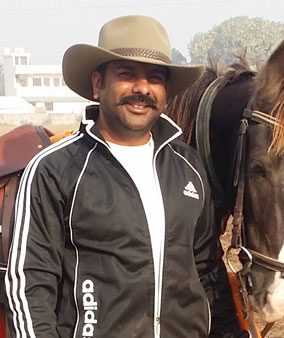
Stay close to nature at Maa Ashapura Farm – a
boutique retreat near Ranthambore National Park.
Enjoy wildlife safaris, Marwari horse experiences, yoga, nature walks, and
private dining.