
Beyond the famous tigers of Ranthambore and the serenity of the national park lies a quieter world — one that beats to the rhythm of village life. The Rajasthani countryside, with its earthy charm, colorful attire, and deep-rooted traditions, offers an experience that is as enriching as it is humbling. At Maa Ashapura Boutique Farm, this experience is not just a passing activity — it’s part of the soul of the place.
Guests here don’t just stay at a resort; they step into a living story. The farm connects travelers directly to the daily lives of Ranthambore’s local communities, creating meaningful moments that blend culture, connection, and authenticity.
From the aroma of freshly baked rotis on clay stoves to the sound of folk songs at dusk, every detail brings you closer to the timeless spirit of Rajasthan’s rural heart.
The day in rural Ranthambore begins with simplicity. At dawn, the air carries a mix of mist and the faint smell of cow dung used to plaster mud houses — a centuries-old tradition that keeps homes cool and insect-free. Women in vibrant ghagras fetch water from the well, balancing brass pots effortlessly on their heads, while men prepare their bullock carts for the day’s work.
Guests at Maa Ashapura Farm are often invited to join these early rituals. You might accompany a farmer to the nearby field, learn how mustard and wheat are cultivated, or help collect fodder for cattle. It’s an immersive experience that reminds you of how deeply connected rural Rajasthan remains to its land.
The gentle rhythm of the morning — the sound of birds, the jingling of bangles, the laughter of children heading to school — creates a symphony of everyday life that modern cities have long forgotten.
One of the defining features of Rajasthan’s rural identity is its crafts. Around Ranthambore, small clusters of artisans continue to practice age-old skills passed down through generations. During your stay, Maa Ashapura Boutique Farm arranges interactive sessions where guests can meet these artisans — potters, weavers, block printers, and miniature painters — in their homes or workshops.
At the nearby Bagru village, visitors can try their hand at block printing, a heritage craft using natural dyes and hand-carved wooden blocks. The process is slow and meditative, involving precision and patience. It’s not just an art form — it’s a legacy of sustainable design.
Similarly, local potters demonstrate how they shape clay into water pots and diyas using simple hand tools. Guests can try molding their own pieces, often laughing at their first imperfect attempts while realizing the skill hidden in simplicity.
Every craft you encounter in these villages tells a story — of resilience, of family pride, and of creativity that survives beyond technology.
What makes the experience at Maa Ashapura Boutique Farm unique is that it doesn’t present rural life as a performance for tourists. Instead, it builds genuine connections between travelers and villagers.
Guests are encouraged to join locals in real tasks — plucking vegetables, tending to animals, or even learning traditional cooking techniques. The bond that forms during these shared experiences feels honest and warm.
Rajasthan’s villages operate on community spirit. Every festival, harvest, or wedding becomes a collective event. You may find yourself invited to a family meal or offered a cup of chai in a neighbor’s courtyard — gestures that reflect Rajasthan’s famous hospitality.
The villagers around Ranthambore take pride in their self-sustained lifestyle. Despite limited resources, their days are filled with gratitude and joy — a lesson in minimalism and mindfulness for anyone visiting from a busy city.
In Rajasthan, food is more than nourishment — it’s an expression of care. At Maa Ashapura Boutique Farm, you taste this authenticity in every bite. Meals are inspired by traditional recipes that have been cooked in local homes for centuries.
Guests can join women from nearby villages in preparing dishes like bajre ki roti, ker sangri, gatte ki sabzi, and dal bati churma. The process is slow, deliberate, and rooted in love. Cooking on a chulha (clay stove) with cow dung cakes as fuel gives food an earthy flavor impossible to replicate in modern kitchens.
Many ingredients come straight from the farm’s organic gardens — fresh coriander, millets, green chilies, and mustard oil. Eating together, sitting on floor mats, and sharing stories with local hosts create a feeling of belonging that no restaurant can match.
For travelers seeking authentic Rajasthan cuisine, this isn’t just dining — it’s cultural immersion.
To understand Rajasthan’s heart, you must meet its women. Draped in vivid saris, faces half-covered with veils, they are the silent backbone of village life — tending fields, managing households, and keeping traditions alive.
At Maa Ashapura Farm, special interactions are arranged with women’s self-help groups who make handicrafts, papads, or pickles to support their families. Guests can see how micro-enterprises empower these women while preserving local art forms.
Conversations over chai often reveal wisdom about life, resilience, and happiness that no philosophy book can teach. Their laughter, despite hardship, becomes the most inspiring part of the journey.
The property also supports these groups by selling their handmade goods in the boutique store — ensuring that tourism contributes directly to their livelihood.
As the sun sets over the Aravalli hills, the entire landscape around Maa Ashapura Farm glows with golden light. The evenings come alive with local culture — folk songs, dances, and storytelling traditions that have entertained generations.
The farm organizes small, intimate performances where villagers share their art — soulful renditions of Maand or Panihari songs, and traditional dances accompanied by dhol and khartal. The atmosphere feels more like a family gathering than a show.
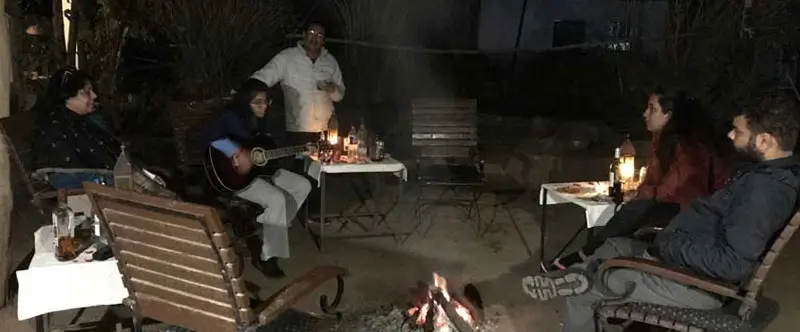
Guests sit around the bonfire, sipping herbal tea or local buttermilk, under a sky full of stars. The rhythm of the songs blends with the sounds of crickets, creating an unforgettable sensory experience.
These evenings celebrate Rajasthan’s intangible heritage — not as a spectacle, but as a living culture that breathes joy and pride.
Village life around Ranthambore is guided by the cycle of nature. People rise with the sun and sleep early, in harmony with daylight and seasons. This rhythm, though ancient, holds deep wisdom.
At Maa Ashapura Boutique Farm, guests experience this natural timeline. There’s no rush, no artificial noise. The quiet surroundings and slow pace encourage reflection and rest. Walking barefoot on the earth, listening to birds, or helping water plants in the morning garden reconnects you with what’s real.
This simplicity is what makes rural Rajasthan so healing. It teaches that happiness doesn’t depend on possessions but on peace, purpose, and people.
One of the core values of Maa Ashapura Farm is ensuring that tourism benefits the local ecosystem, not exploit it. The resort employs villagers, sources ingredients from nearby farms, and collaborates with local guides for cultural tours.
A portion of earnings supports education programs and women’s cooperatives in the surrounding villages. Guests are also encouraged to contribute — by planting trees, donating educational materials, or simply shopping local crafts.
This model of responsible tourism ensures that every traveler leaves a positive footprint behind. It’s a partnership between guests and hosts built on mutual respect and shared growth.
Spending even a single day with Ranthambore’s villagers can change how you see life. Their ability to stay content in simplicity, their connection to nature, and their spirit of sharing are lessons modern life desperately needs.
At Maa Ashapura Boutique Farm, these lessons unfold naturally. You don’t attend a class on mindfulness — you learn it by watching a farmer care for his crops. You don’t read about gratitude — you feel it when a woman offers you a fresh roti she just cooked for her family.
This immersion in local life doesn’t just create memories — it transforms perspectives. Guests leave with a deeper appreciation for balance, sustainability, and the beauty of human connection.
Q.1 Can guests visit nearby villages from Maa Ashapura Farm?
Yes. The property organizes guided visits to nearby villages to experience authentic local life.
Q.2 Are these interactions respectful to villagers?
Absolutely. Visits are designed to be educational and mutually beneficial, not intrusive.
Q.3 Can I participate in daily farming or cooking?
Yes, guests can join farming, milking, and traditional Rajasthani cooking sessions at the farm.
Q.4 Is it safe to explore rural areas around Ranthambore?
Yes, all tours are conducted with trained local guides familiar with the community.
Q.5 Are language barriers a problem?
Not at all. The staff helps translate and facilitate communication during village interactions.
Q.6 What kind of crafts can I learn about?
Guests can see pottery, weaving, block printing, and other rural art forms up close.
Q.7 Do villagers benefit financially from tourism?
Yes, each visit and performance contributes directly to the local economy.
Q.8 Can I buy handmade products from the locals?
Yes, there’s a small shop at the farm selling locally crafted goods and organic items.
Q.9 Are cultural performances organized regularly?
Yes, intimate folk evenings are arranged several times a week, depending on occupancy.
Q.10 What’s the best time to visit for rural activities?
Between October and March, when weather conditions are pleasant for outdoor exploration.

Stay close to nature at Maa Ashapura Farm – a
boutique retreat near Ranthambore National Park.
Enjoy wildlife safaris, Marwari horse experiences, yoga, nature walks, and
private dining.