
Indore to Ranthambore is a practical journey for travellers who want to combine Madhya Pradesh with one of Rajasthan's best-known wildlife destinations. The route moves from a major central Indian city toward Sawai Madhopur, the gateway to Ranthambore National Park, where dry deciduous forests, lakes, rocky ridges, old stone structures and Bengal tiger habitat create a completely different setting.
The Indore to Ranthambore distance by road is approximately 380 to 430 kilometres, depending on the selected highway, current road conditions and the location of the accommodation around Sawai Madhopur. A realistic private-car journey generally requires approximately 7½ to 9 hours, including normal food and refreshment breaks. The drive can be completed comfortably in one day, but it should not be squeezed immediately before a fixed safari reporting time.
Train travel is another useful option. Visitors need to search for services between Indore Junction (INDB) and Sawai Madhopur Junction (SWM). Direct railway services may operate on particular days, while other schedules can require a connection. The exact train and operating day should always be checked before safari reservations and accommodation are tied to a specific arrival time.
A private Indore to Ranthambore taxi is generally best for families and groups who value door-to-door convenience. Train travel usually provides better value for solo travellers and couples. Flying is rarely the most straightforward solution because Ranthambore has no regular commercial airport; an air journey would require flying to another city and completing the remaining distance by road.
The relatively manageable road distance makes Ranthambore suitable for a multi-night wildlife break from Indore, provided enough time is allocated for the forest rather than treating the destination as a one-safari stop.
The distance from Indore to Ranthambore should be treated as approximately 380–430 kilometres because the final number changes according to routing and hotel location. A traveller beginning near Indore Airport may receive a different navigation estimate from someone leaving Vijay Nagar or the city's eastern outskirts. At the destination, reaching Sawai Madhopur town does not automatically mean the journey is finished because accommodation is distributed around different parts of the Ranthambore tourism area.
A realistic driving time is around 7½ to 9 hours. Under favourable conditions and with limited stopping, the journey may be completed more quickly. Travellers should nevertheless budget for a full daytime transfer. Roadworks, local traffic, meal breaks and weather can all increase the journey.
An early departure from Indore works best. Leaving around 6:00 AM allows travellers to complete several hours of driving before midday and creates a useful safety margin if one road section becomes slower than expected. With breakfast and another short stop, arrival during the mid-to-late afternoon is realistic.
This timing is particularly useful because it leaves the evening free before the first Ranthambore morning safari. Wildlife drives begin early, and visitors may need to be ready before sunrise according to the season and pickup arrangements. Reaching the property at midnight after a long drive and waking again after only a few hours of sleep reduces the quality of the experience.
A same-day afternoon safari is technically possible only with a very early departure and favourable road conditions, but it creates unnecessary risk. Safari permits operate according to fixed shifts. A road delay cannot be used to request a later forest entry.
The return journey should be treated with similar care. After an early morning safari, allow time for breakfast, packing and checkout before beginning the drive to Indore. Trying to complete a safari and a long road transfer without adequate rest can make the final day unnecessarily tiring.
From planning your arrival from Indore to enjoying peaceful stays, wildlife safaris and authentic experiences, make every moment of your Ranthambore journey truly memorable.
The Indore to Ranthambore road route can vary depending on current navigation. Travellers generally move north from Indore toward Rajasthan, with route combinations potentially passing through the Ujjain–Agar–Jhalawar/Kota side or other regional corridors before continuing toward Sawai Madhopur.
The fastest route can change when roadworks or local conditions affect one section, so live navigation should be checked on the morning of departure. An old highway description should never take priority over current road information.
Kota can serve as a useful geographical reference on some route combinations. If the journey passes close enough to the city, it can also provide a practical meal break. However, travellers should not turn a direct transfer into a complicated sightseeing schedule when a safari is booked for the next morning.
The journey is long enough to justify at least one proper meal stop and one shorter break. Drivers should avoid completing seven or eight hours continuously merely to arrive thirty minutes earlier.
For self-driving visitors, basic vehicle checks are important. Tyre pressure, the spare tyre, engine fluids, brakes and air conditioning should be inspected before leaving Indore. Fuel should be topped up before entering long highway sections, and FASTag balance should be sufficient for the chosen route.
Seasonal conditions can influence the Indore to Ranthambore driving time. During the monsoon, heavy rain can slow regional roads and reduce visibility. During hotter periods, midday temperatures can be demanding, making reliable air conditioning important. Winter generally offers comfortable daytime road conditions, although early morning fog can occasionally affect visibility.
Travellers unfamiliar with long-distance driving may prefer a professional intercity driver. Families with children or elderly passengers also benefit from being able to rest while someone experienced handles the road.
Train travel can be an excellent alternative to spending most of the day in a car. The railway destination is Sawai Madhopur Junction (SWM), which serves as the principal rail gateway for Ranthambore National Park.
Travellers should search from Indore Junction (INDB) and check direct services as well as suitable connections. Direct train availability can vary according to the day of the week and current railway schedule, so the transport should be confirmed before making tightly timed safari commitments.
A suitable Indore to Sawai Madhopur train may take approximately 8 to 12 hours, depending on the service and route. Some connections can take longer. While this may appear similar to the road duration, railway travel has one major advantage: passengers can rest during the journey.
An overnight service can be particularly convenient. A reserved berth allows travellers to sleep for part of the journey rather than losing an entire day sitting in a vehicle. For this distance, AC 3 Tier is a practical middle-ground choice, while AC 2 Tier provides greater space and privacy.
Railway fares depend on train category, class, quota and availability. As a useful budgeting range, Sleeper accommodation can cost approximately ₹300–₹550, while AC 3 Tier can commonly fall around ₹800–₹1,400. AC 2 Tier may cost around ₹1,200–₹2,000 or more, with First AC and premium services priced higher.
These figures are not permanent fares. The current payable amount should always be checked when the ticket is booked.
The complete railway journey also includes transportation from your location in Indore to the boarding station and from Sawai Madhopur Junction to your accommodation. If the train reaches Sawai Madhopur late at night, arrange the Ranthambore hotel transfer in advance rather than searching for transport after arrival.
A private taxi from Indore to Ranthambore provides the simplest transport arrangement for travellers who want to avoid stations and fixed timetables. The vehicle can collect passengers from their home, hotel or airport and travel directly to their chosen accommodation.
For a one-way transfer, a comfortable higher-side budget for a sedan is approximately ₹8,000–₹12,000. An SUV or MPV can reasonably cost around ₹11,000–₹16,000 or more, depending on the operator, vehicle, season and inclusions.
Premium cars and last-minute bookings may exceed these figures.
Always ask for an all-inclusive quotation. Confirm whether tolls, parking, state taxes and driver allowance are included and whether the operator applies return-kilometre charges to a one-way booking.
Vehicle size should be selected according to both passengers and luggage. A sedan is generally suitable for two adults with ordinary suitcases. Four adults travelling for several days will be more comfortable in an SUV or MPV.
Photography equipment changes the calculation further. A large telephoto lens, multiple camera bags and hard cases require considerable space and should not be compressed beneath heavy suitcases.
For a group of four, the cost per person of an SUV becomes relatively reasonable. Door-to-door convenience can justify the additional expense compared with railway tickets and transfers at both ends.
The taxi also gives travellers control over breaks. Families can stop when children need food, while elderly passengers can take more frequent rest periods. This flexibility is the main reason private road transport remains attractive even when rail is cheaper.
Ranthambore does not have a regular commercial airport, which means Indore to Ranthambore by flight always involves another transport stage.
Jaipur is the most practical major airport for many Ranthambore visitors. If a suitable Indore-to-Jaipur flight is available, travellers can fly to Jaipur and continue approximately 170–190 kilometres by road toward Sawai Madhopur.
The flight itself may take around 1½ hours, but this is not the complete journey. Travellers need to reach Indore Airport, arrive before departure, complete security, collect luggage in Jaipur and then spend around 3½–4½ hours on the Jaipur-to-Ranthambore road transfer.
Door-to-door travel can therefore still occupy much of the day.
Airfare also fluctuates considerably. A one-way economy ticket may sometimes be found around ₹4,000–₹7,000, while short-notice and holiday fares can exceed ₹8,000–₹12,000. The private Jaipur-to-Ranthambore transfer adds several thousand rupees more.
For most travellers, the Indore to Ranthambore train or direct road journey is simpler and often cheaper. Flying becomes attractive when a particularly convenient flight is available or when a traveller strongly prefers avoiding a long continuous road journey.
A solo traveller will usually find train travel the most economical. Even an air-conditioned reserved berth can cost far less than a private taxi.
For couples, rail remains strong when the timetable is convenient. An overnight service can also save the cost of spending an entire daytime period on the road.
Families should compare the complete cost rather than ticket prices alone. Four railway tickets, local transfers and luggage handling can reduce the financial difference between rail and a private vehicle.
A private Indore to Ranthambore car becomes particularly attractive for three or four adults. It provides direct travel and removes the need to coordinate station arrival, railway boarding and hotel pickup.
Flying via Jaipur is the premium alternative when the schedule works. It can reduce time spent continuously on the road but introduces airport procedures and another substantial transfer.
The transport decision should also consider the safari. A cheap railway service arriving at 3:00 AM may be poor value if the first forest drive begins only a few hours later. Similarly, driving overnight simply to save a hotel night can leave everyone exhausted.
Arrival quality matters as much as journey price.
Ranthambore generally operates morning and afternoon forest shifts. Exact times vary with daylight and season. Morning entry can begin around 7:00 AM during colder periods and shift toward approximately 6:00 AM when sunrise becomes earlier. Afternoon drives can begin around 2:00 PM in shorter winter days and move toward approximately 3:30 PM as daylight increases.
Visitors should follow the reporting time associated with the actual permit because operational schedules can change.
A typical Ranthambore National Park safari lasts around three to three and a half hours. Visitors enter authorised tourism routes in vehicles such as smaller Gypsies or larger Canters, subject to permit availability and current forest arrangements.
For travellers arriving from Indore, the first morning after arrival is generally the best time for the first safari. It allows enough sleep after the transfer and avoids gambling a valuable permit against road or railway delays.
Tiger sightings can never be guaranteed. Ranthambore's tigers move freely according to territory, prey, water and weather. A safari can produce a prolonged tiger sighting or no tiger at all.
Multiple drives are therefore valuable. Visitors also encounter sambar deer, spotted deer, nilgai, wild boar, crocodiles, langurs and numerous bird species. Leopards are present but can be considerably more elusive.
After travelling several hundred kilometres from Indore, a single-night stay provides little time to appreciate the reserve.
A minimum of two nights in Ranthambore works for visitors with a tight schedule, while three nights provide a much better wildlife break.
A comfortable schedule involves arriving from Indore during the afternoon, resting that evening and taking a morning safari the following day. A second drive can be booked that afternoon if desired. The next morning can remain available for another safari before departure.
This gives visitors several opportunities under different light and weather conditions.
Wildlife behaviour can change dramatically between morning and afternoon. A water body that appears quiet at sunrise can become active later in the day. Deer alarm calls can suddenly reveal predator movement in a section that seemed empty minutes earlier.
For photographers, several drives also provide different landscapes and angles. Ranthambore wildlife photography is not limited to tiger portraits. Lakes, dry forests, stone ruins, rocky ridges and changing light give the reserve a distinctive visual identity.
Three nights also provide enough recovery time between the journey from Indore and the return trip.
Travel beyond the ordinary with a thoughtfully planned Ranthambore escape, combining comfortable stays, unforgettable wildlife experiences and the beauty of Rajasthan.
Keep identification documents and safari reservation information easily accessible. Where a permit requires a specific identification document, carry the same valid document used during booking.
Save the accommodation's location and contact details offline. Mobile connectivity can become inconsistent on some regional road sections.
Road travellers should carry water, essential medication, phone chargers and basic snacks. Avoid carrying excessive food when good highway restaurants are available because regular breaks are useful on a long drive.
Train travellers should arrange their Sawai Madhopur station pickup before departure, particularly when arriving late at night.
For safari clothing, match the season. Winter mornings can be cold in an open vehicle, so layers and a jacket are valuable. Warmer periods require breathable clothing, sunglasses, a hat and sun protection.
Dust is common during dry conditions. A scarf can make the safari more comfortable, and photographers should keep a lens cloth accessible.
Binoculars are also worth carrying. Many rewarding wildlife observations occur too far away for the naked eye, particularly birds and animals moving on distant slopes.
The strongest reason to travel from Indore to Ranthambore is the change in environment. A day that begins in a busy central Indian city can end near Rajasthan's tiger landscape, and the following morning can begin inside an open safari vehicle listening for sambar and langur alarm calls.
The Indore to Ranthambore road distance is long enough to require preparation but short enough for a three- or four-night break without flights.
Visitors who enjoy driving can make the journey part of the experience. Those who prefer comfort can use rail, while groups can divide the cost of a private vehicle.
What matters most is not forcing the transfer and safari into the same narrow window.
Reach Ranthambore with enough time to rest. Take more than one safari when possible. Allow the forest to provide whatever wildlife activity is natural that day rather than judging the destination by a guaranteed tiger expectation.
With sensible timing, the journey from Indore becomes far more than a long road transfer. It becomes an efficient route from central India to one of Rajasthan's most distinctive wildlife landscapes.
The Indore to Ranthambore distance by road is approximately 380–430 kilometres, depending on the route and exact accommodation location.
Train is generally cheaper for solo travellers and couples. A private car from Indore to Ranthambore provides greater convenience for families, groups and travellers carrying substantial luggage.
A realistic road journey requires around 7½–9 hours, including normal traffic and refreshment breaks.
Direct services to Sawai Madhopur Junction may operate on selected days. Train availability and operating schedules should be checked for the actual travel date.
Suitable services can take approximately 8–12 hours, while routes requiring connections may take longer.
A practical higher-side budget is approximately ₹8,000–₹12,000 for a sedan and ₹11,000–₹16,000 or more for an SUV or MPV.
No. Ranthambore does not have a regular commercial airport. Travellers considering air travel commonly use Jaipur Airport and continue to Ranthambore by road.
It is possible only with favourable timing, but it is not recommended. Arriving first and taking the safari the following morning protects the booking against road delays.
Two nights are workable, while three nights in Ranthambore provide a better opportunity for multiple safaris and sufficient rest after the journey.
Book for Sawai Madhopur Junction (SWM), the principal railway gateway serving visitors travelling to Ranthambore National Park.
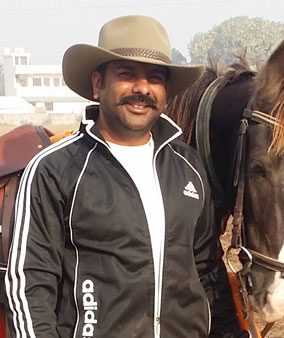
Stay close to nature at Maa Ashapura Farm – a
boutique retreat near Ranthambore National Park.
Enjoy wildlife safaris, Marwari horse experiences, yoga, nature walks, and
private dining.