
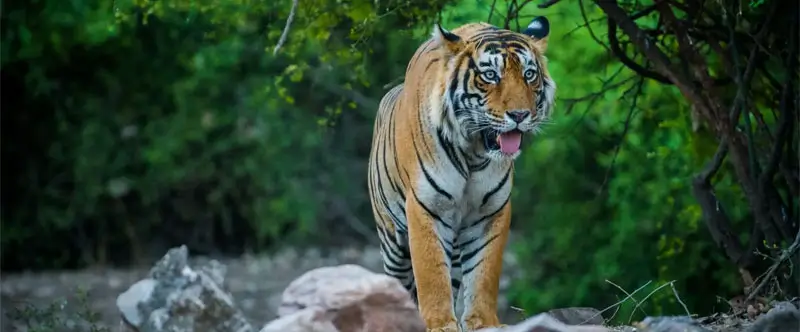
India is home to the largest population of wild tigers on Earth, making it one of the most sought-after destinations for tiger safaris worldwide. Among the many national parks that protect these magnificent predators, three names dominate almost every traveler’s research: Ranthambore National Park, Bandhavgarh National Park, and Kanha National Park.
Each of these parks offers a completely different tiger safari experience. Choosing between them is not about which park is “best,” but about which one aligns most closely with a traveler’s expectations, patience level, comfort preferences, and wildlife interests. A first-time visitor seeking dramatic sightings may prioritize one park, while a seasoned wildlife enthusiast seeking immersion and biodiversity may choose another.
This detailed guide compares Ranthambore, Bandhavgarh, and Kanha across terrain, tiger behavior, safari dynamics, visibility, crowd patterns, and overall experience—so travelers can make informed decisions rather than relying on surface-level recommendations.
A tiger safari is not simply about seeing a tiger. It is about observing an ecosystem where the tiger sits at the top of the food chain. The quality of a safari depends on terrain openness, vegetation density, prey movement, water availability, and how accustomed tigers are to vehicles.
Understanding these factors helps travelers appreciate why each park delivers a very different experience, even though all three protect the same species.
Ranthambore is often the first choice for travelers planning their first tiger safari in India. Its biggest advantage lies in visibility. The park’s dry deciduous forest, open grasslands, and large lakes make it easier to spot tigers compared to dense jungle environments.
Tigers in Ranthambore are relatively habituated to safari vehicles. This does not mean they are tame, but they are more tolerant of human presence due to decades of regulated tourism. As a result, sightings can be prolonged and visually dramatic.
The presence of lakes, ruins, and ancient structures creates a striking visual contrast. Seeing a tiger walk past centuries-old fort walls is a uniquely Ranthambore experience that photographers value highly.
Accessibility is another major strength. Ranthambore is easier to reach than most tiger reserves, especially for international travelers. This convenience contributes to higher visitor numbers, which can sometimes result in crowded sightings.
Ranthambore suits travelers who want strong chances of tiger sightings, clear landscapes, and a visually powerful safari experience, even if it means sharing space with other vehicles.
Bandhavgarh is known for having one of the highest tiger densities in India. This does not guarantee sightings, but it increases the probability of frequent tiger movement within smaller territories.
The forest in Bandhavgarh is denser than Ranthambore, with sal forests and thick undergrowth. This creates a more immersive jungle feel but reduces long-distance visibility. Sightings here often happen suddenly and at close range, making them emotionally intense.
Bandhavgarh’s terrain feels more primal. Tigers emerge unexpectedly from dense foliage, cross tracks quickly, and disappear just as fast. This unpredictability appeals to experienced wildlife lovers who enjoy raw encounters rather than prolonged viewing.
Unlike Ranthambore, Bandhavgarh feels less open and more enclosed. The silence is deeper, and the jungle atmosphere more dominant. For photographers, this means dramatic close-ups but fewer wide landscape shots.
Bandhavgarh is ideal for travelers who prioritize intensity, raw jungle ambiance, and higher tiger density over comfort and openness.
Kanha is often described as the most balanced tiger reserve in India. It offers a combination of open meadows, dense forests, rolling hills, and large sal trees. This diversity creates a visually stunning environment and supports a wide range of wildlife beyond tigers.
Tiger sightings in Kanha are steady but often less dramatic than Ranthambore. Visibility varies, and sightings may require patience. However, Kanha compensates with biodiversity. Barasingha, deer, wild dogs, birds, and other species contribute to a richer ecological experience.
Kanha’s scale is larger than both Ranthambore and Bandhavgarh. Safaris here feel expansive and immersive. The landscape itself becomes part of the experience rather than a backdrop.
Kanha suits travelers who value ecosystem understanding, scenic beauty, and a calmer safari rhythm rather than high-adrenaline encounters.
Ranthambore’s terrain is dry, rocky, and open, making animals easier to spot from a distance. Bandhavgarh’s dense forests create surprise encounters and sudden movement. Kanha’s mix of meadows and forest provides visual balance and long scenic drives.
Terrain directly influences how safaris feel. Open terrain favors visibility, while dense terrain favors intensity. Mixed terrain favors immersion.
Tigers in Ranthambore are more visible and tolerant of vehicles, often seen walking on tracks or resting near water bodies. Bandhavgarh tigers are more territorial and elusive, appearing briefly before retreating. Kanha tigers are cautious but consistent, blending into the landscape.
None of these behaviors are better or worse. They simply reflect how each ecosystem functions.
Ranthambore experiences higher tourist volume due to accessibility. This can lead to multiple vehicles at sightings. Bandhavgarh sees fewer vehicles but more intense moments. Kanha offers space and breathing room, with safaris spread over larger areas.
Travelers sensitive to crowds may prefer Kanha or Bandhavgarh. Those focused on sightings may accept Ranthambore’s popularity.
Ranthambore offers iconic compositions with water, ruins, and open terrain. Bandhavgarh offers close, dramatic portraits. Kanha offers scenic compositions with wildlife integrated into landscapes.
Photographers should choose based on style rather than sighting probability alone.
First-time visitors often feel most comfortable in Ranthambore due to accessibility and visibility. The learning curve is gentler, and sightings are easier to interpret.
However, first-time travelers seeking a jungle-heavy experience may prefer Bandhavgarh, while those seeking scenic immersion may enjoy Kanha more.
Families often prefer Ranthambore due to easier logistics and clearer sightings. Kanha also works well for families who enjoy nature beyond tigers. Bandhavgarh may feel intense for younger children due to dense forest and sudden sightings.
Experienced wildlife travelers often gravitate toward Bandhavgarh for intensity or Kanha for ecological richness. Ranthambore remains appealing for its visual drama and historic setting.
Ranthambore is the easiest to reach. Bandhavgarh and Kanha require longer transfers and more planning. Travelers short on time often choose Ranthambore, while those on extended wildlife journeys include central India parks.
Each park represents a different philosophy of wildlife travel. Ranthambore offers clarity and drama. Bandhavgarh offers intensity and density. Kanha offers balance and beauty.
Choosing the right park depends on mindset, not rankings.
Ask what excites you more: visibility, intensity, or immersion. Decide how much time you have. Consider tolerance for crowds, patience for sightings, and interest beyond tigers.
These answers guide the decision better than statistics.
Experienced travelers often combine Ranthambore with either Bandhavgarh or Kanha to experience contrast. This combination reveals how differently tigers live across landscapes.
Such journeys deepen understanding rather than chasing numbers.
Ranthambore amazes visually. Bandhavgarh excites emotionally. Kanha calms intellectually.
Understanding this emotional impact helps travelers align expectations.
India offers diversity, protection, and accessibility unmatched elsewhere. These three parks represent the range of tiger habitats better than any single reserve.
Together, they tell the full story of tiger conservation.
Frequently Asked Questions
Which park has the highest tiger sightings
Bandhavgarh has high density, while Ranthambore offers better visibility.
Which park is best for first-time visitors
Ranthambore is generally easiest for beginners.
Which park is best for photographers
Ranthambore for landscapes, Bandhavgarh for close portraits, Kanha for scenic compositions.
Is Kanha good for tiger sightings
Yes, but patience is required.
Which park is less crowded
Bandhavgarh and Kanha are generally less crowded than Ranthambore.
Can families visit all three parks
Yes, with planning and realistic expectations.
Are tiger sightings guaranteed anywhere
No, sightings depend on natural behavior.
Is one safari enough in any park
Multiple safaris increase understanding and chances.
Which park is best for biodiversity
Kanha offers the richest biodiversity.
Can international tourists visit all three parks easily
Yes, though Ranthambore is the most accessible.
Stay close to nature at Maa Ashapura Farm – a
boutique retreat near Ranthambore National Park.
Enjoy wildlife safaris, Marwari horse experiences, yoga, nature walks, and
private dining.