A safari vehicle can significantly change the way you experience Ranthambore National Park. Two visitors entering the forest during the same morning shift may return with very different impressions simply because one travelled in a smaller Gypsy while the other entered in a larger Canter.
The choice between a Ranthambore Gypsy safari and a Ranthambore Canter safari affects seating, photography angles, mobility, comfort, group size, availability and cost. It can also affect how easily a vehicle responds when fresh tiger movement is reported inside the permitted safari zone.
Neither vehicle guarantees better wildlife sightings. A tiger does not appear because a visitor has paid for a particular vehicle. Safari zones, animal movement, weather, water sources, prey activity and chance remain far more important. Still, selecting the right vehicle can make the hours inside the forest considerably more comfortable and rewarding.
For photographers, couples, families and travellers visiting Ranthambore for the first time, knowing the practical differences before booking is especially useful.
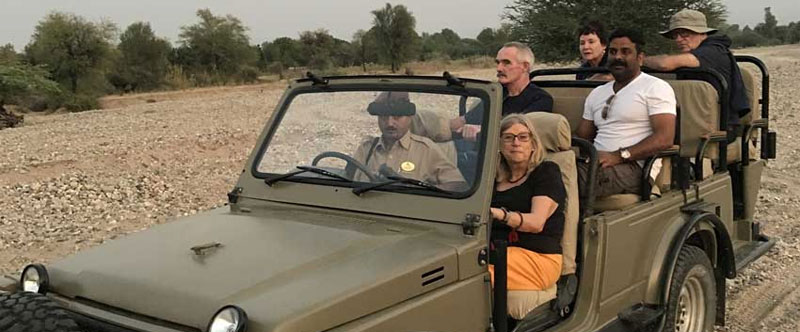
A Gypsy safari in Ranthambore uses a small open-top vehicle designed for a limited number of visitors. It is commonly associated with seating for up to six tourists in addition to the authorised driver and nature guide, subject to current forest department regulations.
Its greatest advantage becomes apparent shortly after entering the forest: size.
Ranthambore contains tracks running through dry woodland, rocky terrain, open grass, lakeside areas and narrower sections where a smaller vehicle feels agile. A Gypsy can respond quickly within the route and zone assigned to it. When guides hear alarm calls from sambar deer or langurs, notice fresh pugmarks, or receive information about animal movement, a smaller vehicle can often reposition efficiently where regulations allow.
This mobility is valuable, but it should not be confused with permission to drive anywhere. A Ranthambore safari permit is associated with specific tourism rules and normally a designated zone or route. A Gypsy cannot leave its permitted tourism area simply because a tiger has been reported elsewhere.
For photography, the Gypsy is generally the preferred option. Fewer passengers mean fewer people competing for an unobstructed viewing angle. The lower seating position can also produce more natural eye-level photographs than a taller vehicle.
Imagine a tiger appearing beside a forest track. In a smaller vehicle, photographers may have greater flexibility to reposition themselves within their seats without navigating a large group. Long lenses are easier to handle when there are fewer shoulders, phones and cameras around you.
A Gypsy is also attractive for couples and families who value a more intimate safari atmosphere. If all six seats are booked privately, the group has considerably more control over seating arrangements and can communicate easily with the guide.
There are disadvantages. Availability is limited and popular safari dates can fill quickly. A private Gypsy also costs considerably more than simply purchasing seats in a shared larger vehicle.
The open design means visitors remain exposed to dust, cold morning air, direct sunlight and occasional rough stretches of road. During winter morning drives, temperatures can feel surprisingly low in an open vehicle. During hotter periods, afternoon sunlight can be intense.
Despite these limitations, travellers who place photography, privacy and a smaller-group experience at the top of their priorities usually favour the Ranthambore Gypsy safari.
Choose the Right Safari. Experience Ranthambore Differently.
The right safari vehicle depends on your group, priorities, photography needs and budget—not on promises of guaranteed tiger sightings.
A Canter safari in Ranthambore uses a much larger open-top vehicle and carries significantly more passengers than a Gypsy. Canters are commonly associated with approximately 20 visitor seats, although operational capacity should always be confirmed against the current booking rules.
The most obvious advantage is cost efficiency.
A traveller who wants to experience Ranthambore without paying for a smaller private vehicle can purchase a Canter seat where available. This makes the Ranthambore Canter safari particularly useful for larger groups, solo travellers, students, budget-conscious visitors and families whose primary objective is to enter the forest rather than secure a private photographic setup.
The higher seating position has both advantages and disadvantages. Being elevated can provide a useful view across certain types of vegetation and may help passengers see over low bushes or other vehicles. In open areas, this can create a broad perspective of the landscape.
However, the vehicle's larger size reduces flexibility. More passengers also mean more movement and more competition for the best viewing side when an animal appears.
Suppose a tiger emerges on the left side of the track. Passengers seated on that side immediately have a clear view, while people on the opposite side may need to stand or adjust their position according to guide instructions and safety rules. Twenty excited visitors attempting to photograph the same tiger can feel very different from six people sharing a Gypsy.
Noise can also become an issue. Responsible guides ask visitors to remain quiet, particularly around wildlife, but a larger group naturally creates more conversation and movement.
A Canter is not an inferior safari. It travels through authorised tourism areas and can produce exactly the same unforgettable tiger encounter. There are many occasions when a Canter sees a tiger while nearby Gypsies do not.
The key difference is not the tiger. It is the visitor experience surrounding the sighting.
For someone taking a first Ranthambore National Park safari and working within a moderate budget, a Canter can offer excellent value. For someone carrying expensive photography equipment or seeking privacy, the compromises become more noticeable.
One of the biggest misconceptions surrounding Gypsy vs Canter in Ranthambore is that the smaller vehicle automatically provides better tiger sightings.
It does not.
Tiger movement determines the sighting. A Canter may encounter a tiger crossing directly in front of it while a Gypsy in another section sees only deer and birds. Conversely, a Gypsy may reach an authorised observation point efficiently and receive an excellent sighting while a larger vehicle arrives later.
What the Gypsy improves is the way a sighting can be experienced.
Wildlife photography requires space. A telephoto lens may need room to rotate from one side of the vehicle to another. Photographers also need stable positions and clean lines of sight. With fewer passengers, these requirements are easier to manage.
A Gypsy safari for photography therefore makes sense for serious photographers using interchangeable-lens cameras and long telephoto lenses. It is also preferable for content creators who need both landscape and wildlife footage.
The Canter works well for casual photography using smartphones, compact cameras or smaller lenses. A passenger with the right seat can still capture excellent photographs. The challenge comes when an animal appears unexpectedly on the opposite side.
Ranthambore's landscape makes vehicle position particularly important. Tigers may appear beside Rajbagh Lake, cross an open track, rest near water or move through vegetation. Leopards can be considerably more difficult to spot, while sambar, spotted deer, nilgai, wild boar, crocodiles and numerous bird species provide additional subjects.
The best photographic strategy is therefore not simply "book a Gypsy." It is to combine the right vehicle with patience, multiple safari drives and realistic expectations.
Travellers primarily interested in tiger photography in Ranthambore should book a Gypsy early when possible. Casual visitors can comfortably choose a Canter if Gypsy permits are unavailable.
Ranthambore's tourism system is divided into multiple zones, commonly referred to as Ranthambore Safari Zones 1 to 10. Each offers different terrain, vegetation, water sources and wildlife movement.
A frequent question is whether certain zones require a Gypsy while others require a Canter.
The practical answer is that vehicle allocation and zone access are governed by current forest department arrangements rather than a permanent rule stating that a particular zone always requires one vehicle type. Availability can vary according to permits, season, operational conditions, route allocation and conservation requirements.
Visitors should therefore avoid choosing a zone based on outdated claims found on travel forums.
Zones 1–5 are often discussed as the older core tourism side of Ranthambore, while Zones 6–10 cover other sections of the tiger reserve tourism landscape. Tiger movement is not restricted to a tourist's preferred zone. Individual tigers maintain territories that can change over time.
A zone that produced frequent sightings last month may become quieter. Another zone may suddenly become active because a tigress with cubs is moving regularly near a water source.
This is why chasing a so-called "best zone in Ranthambore" can be misleading.
A better approach is to secure legitimate safari permits, select the preferred vehicle where available and take more than one drive if the schedule permits. Two or three safaris can provide a much broader impression of the landscape than putting all expectations on one highly advertised zone.
Current zone allocation and vehicle availability should always be checked at the time of booking. Forest authorities can revise routes, close sections, impose seasonal restrictions or change operating procedures.
Ranthambore safaris generally operate in morning and afternoon shifts, with exact timings changing according to daylight and season.
During colder periods, morning entry can be around 7:00 AM, while hotter months may see departures closer to 6:00 AM. Afternoon safaris can begin around 2:00 PM in winter and move later as daylight hours increase. Visitors should treat these only as indicative timings and follow the reporting time printed or communicated with their actual permit.
A safari typically occupies several hours once reporting, boarding, entry procedures and the forest drive are considered.
Clothing should match the season rather than the appearance of a safari photograph. Winter mornings can be cold in an open Gypsy or Canter. A jacket, scarf and layered clothing are useful. During warmer periods, breathable neutral-coloured clothing, a hat and sun protection become more important.
Carry drinking water according to permitted park rules, sunglasses, binoculars and a camera if required. Avoid loud clothing, unnecessary perfume and anything that creates disturbance.
Dust is part of the experience. A light scarf can protect the face and camera equipment during dry conditions. Photographers should carry a lens cloth and ensure batteries and memory cards are ready before entering the park.
Wildlife etiquette applies equally to both vehicles. Visitors should remain quiet near animals, avoid throwing anything from the vehicle and follow instructions from authorised guides and drivers.
A good Ranthambore wildlife safari is not a race between vehicles. Patient observation often reveals details that hurried visitors miss: fresh pugmarks, langur alarm calls, a crocodile near water, an owl hidden in a tree or deer suddenly staring in one direction.
Your Ranthambore safari deserves more than a standard booking. From choosing between a private Gypsy and a Canter to planning the right stay around your wildlife experience, every detail matters.
The cost of a Ranthambore safari booking depends on several components and can change when government fees or operational charges are revised.
The amount can include park entry charges, vehicle charges, guide fees, reservation charges, taxes and other applicable components. Indian and foreign visitors may encounter different fee structures under prevailing regulations.
For this reason, fixed prices quoted months in advance can become misleading. Visitors should check the official or authorised booking channel for the amount applicable to their date, nationality, vehicle and safari type.
As a practical budgeting range, a shared Canter seat can often represent the lower-cost entry point, while booking an entire Gypsy can run into several thousand rupees for a single safari and may rise substantially depending on booking category, permit structure and applicable charges.
Premium or special categories, where officially offered, can cost significantly more than standard safari arrangements.
The important point is to compare what is included.
A suspiciously cheap quote may exclude permit charges or other mandatory components. An expensive package may include transfers, assistance or private vehicle arrangements beyond the basic forest permit.
Travellers should ask for the total safari cost rather than only the vehicle rate.
For serious photographers, the additional expense of a Gypsy can be justified by space and flexibility. For a family that simply wants one enjoyable forest drive, a Canter may provide better value.
For couples seeking a quieter safari, a Gypsy is generally the stronger choice.
For professional and enthusiastic photographers, the Ranthambore Gypsy safari is usually worth prioritising because of lower seating, fewer passengers and easier camera movement.
For families wanting privacy, booking an entire Gypsy can make the experience considerably more comfortable, especially when travelling with children who are old enough to follow forest rules.
For solo travellers and visitors watching their budget, the Ranthambore Canter safari offers practical access without the expense of a private vehicle.
For large groups, Canters can be convenient because more people can travel together rather than splitting across several smaller vehicles.
If Gypsy availability has already sold out, travellers should not cancel an entire Ranthambore visit merely because a Canter is available instead. A Canter still enters the forest, follows authorised safari routes and provides genuine wildlife-viewing opportunities.
The strongest approach for travellers staying several nights can even involve trying both. A Gypsy on one drive and a Canter on another reveals how much vehicle type changes the safari perspective.
Ultimately, Gypsy vs Canter safari in Ranthambore should be decided according to photography needs, privacy, budget, group size and permit availability—not claims that one vehicle guarantees a tiger.
A tiger may appear for thirty seconds or remain visible for half an hour. It may walk directly beside a Canter while every Gypsy is elsewhere. That uncertainty is exactly what makes a real wildlife safari different from a staged attraction.
A Gypsy safari is generally better for photography, privacy and smaller groups. A Canter is more economical and suitable for larger groups. Neither vehicle guarantees better tiger sightings.
A standard Gypsy commonly accommodates up to six tourists in addition to the authorised driver and guide, subject to current forest regulations.
A Ranthambore Canter generally accommodates around 20 tourists, although the authorised capacity applicable to your safari should be confirmed while booking.
Not necessarily. Tiger sightings depend on animal movement and the safari route. A Gypsy's advantage is mobility and a smaller group, not guaranteed sightings.
A Gypsy is usually preferred for Ranthambore wildlife photography because fewer passengers and a lower seating position make it easier to handle telephoto lenses and obtain clear viewing angles.
Vehicle and zone access depends on current forest department allocations and operating rules. Travellers should verify the permitted vehicle for their allocated zone when making the reservation.
Both can produce excellent sightings. Wildlife activity changes with temperature, season and animal movement. Taking both morning and afternoon drives gives visitors broader opportunities.
Booking as early as possible is sensible, particularly during popular travel periods, weekends and holidays. Gypsy permits can be especially competitive because fewer seats are available.
Yes. A Canter provides a genuine Ranthambore tiger safari and can encounter the same wildlife. Visitors should not assume a Canter means poor sightings.
A private Gypsy is excellent for families seeking privacy and flexibility. A Canter can be a better choice for larger families or travellers who prefer to keep the safari budget lower.
Stay close to nature at Maa Ashapura Farm – a
boutique retreat near Ranthambore National Park.
Enjoy wildlife safaris, Marwari horse experiences, yoga, nature walks, and
private dining.