
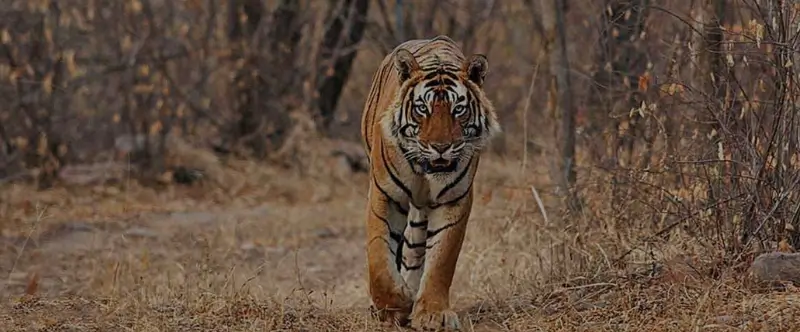
Today, Ranthambore National Park is recognised around the world as one of the finest places to see the majestic Royal Bengal Tiger in its natural habitat. Thousands of wildlife enthusiasts, photographers, filmmakers, researchers, and nature lovers travel from across the globe hoping to witness this magnificent predator walking through ancient ruins, resting beside lakes, or disappearing silently into the dense forest. However, the Ranthambore that visitors admire today is the result of decades of dedicated conservation, careful wildlife management, habitat restoration, and the collective efforts of forest authorities, conservationists, local communities, and responsible tourism.
There was a time when tiger populations across India faced enormous pressure due to habitat destruction, illegal hunting, human encroachment, and declining forest ecosystems. Ranthambore also experienced these challenges. Protecting one of the world's most iconic animals required long-term commitment rather than short-term solutions. Through improved protection measures, scientific monitoring, stronger law enforcement, community awareness, and sustainable tourism practices, Ranthambore gradually transformed into one of India's greatest wildlife conservation success stories.
The remarkable recovery of the tiger population has also created wider environmental benefits. As the tiger population strengthened, the entire ecosystem began to recover. Forests became healthier, prey species increased, biodiversity improved, and responsible tourism generated employment opportunities for thousands of local families. Today, conservation is not only about protecting tigers; it is about preserving an entire natural landscape that supports wildlife, local communities, and future generations.
Visitors enjoying a Ranthambore Tiger Safari may focus primarily on spotting a tiger, but every successful sighting represents years of dedicated conservation work taking place behind the scenes. Understanding this story adds much deeper meaning to every safari experience and helps travellers appreciate why responsible tourism plays such an important role in protecting India's wildlife heritage.
A tiger sighting is more than a spectacular wildlife moment—it represents decades of conservation, habitat protection, scientific monitoring, and dedication.
Like many protected forests across the world, Ranthambore has not always enjoyed the thriving ecosystem that visitors experience today. Several decades ago, wildlife populations faced serious challenges created by illegal hunting, shrinking habitats, pressure from expanding human settlements, uncontrolled grazing, and limited conservation resources. These issues affected not only tigers but also many other species that depended on the same forest ecosystem.
The tiger occupies the highest position in the food chain, making it extremely sensitive to environmental changes. A healthy tiger population requires large territories, abundant prey, reliable water sources, and minimal human disturbance. When any of these factors decline, tiger numbers inevitably begin to fall.
Poaching presented one of the greatest threats. Illegal hunting targeted not only tigers but also prey species such as deer and wild boar. Reduced prey populations made survival increasingly difficult for predators, creating additional pressure on the ecosystem. Every loss affected the natural balance that had developed over thousands of years.
Human activities also placed increasing demands on forest resources. Expansion of nearby settlements, collection of forest products, livestock grazing, and pressure on natural water sources created ongoing challenges for wildlife managers attempting to balance conservation with local livelihoods.
Limited awareness about wildlife conservation further complicated these efforts. At the time, tourism was not yet widely recognised as an important economic opportunity connected directly to protecting forests. Many communities depended heavily on natural resources without fully understanding the long-term environmental consequences.
Recognising these challenges became the first step towards creating effective conservation strategies. Rather than focusing only on protecting individual animals, authorities gradually adopted broader approaches aimed at restoring the entire ecosystem. This shift marked the beginning of Ranthambore's remarkable transformation into one of India's leading wildlife conservation landscapes.
The recovery of Ranthambore National Park did not happen overnight. It resulted from years of consistent conservation initiatives supported by scientific research, improved wildlife protection, stronger law enforcement, habitat management, and cooperation between multiple organisations.
One of the most significant achievements involved strengthening anti-poaching measures. Forest protection teams increased patrols throughout the park, monitored vulnerable areas more effectively, and introduced improved surveillance methods. These efforts significantly reduced illegal hunting while increasing security for both tigers and their prey species.
Habitat restoration also became a major priority. Water bodies were maintained, grasslands improved, invasive vegetation managed, and degraded areas restored to support healthier wildlife populations. Healthy habitats allowed prey animals such as spotted deer, sambar deer, nilgai, and wild boar to increase naturally, providing sufficient food resources for growing tiger numbers.
Scientific monitoring introduced another important improvement. Individual tigers began to be identified through their unique stripe patterns, allowing researchers to monitor movement, reproduction, territory expansion, and overall population health. Modern conservation relies heavily on accurate data, enabling wildlife managers to make informed decisions based on scientific evidence rather than assumptions.
Community participation gradually became equally important. Conservation programmes increasingly recognised that long-term success required cooperation with villages surrounding the national park. Education initiatives, alternative livelihood opportunities, tourism-related employment, and awareness campaigns encouraged local communities to view wildlife protection as a shared responsibility rather than an external restriction.
The growth of responsible wildlife tourism also contributed significantly. Revenue generated through Ranthambore Tiger Safari tourism supported conservation activities while creating employment for guides, naturalists, drivers, hospitality staff, local artisans, and many other businesses connected with sustainable tourism.
Together, these combined efforts created the foundation for Ranthambore's extraordinary wildlife recovery, demonstrating how conservation succeeds when science, community participation, and responsible tourism work together.
Come for the possibility of seeing a Royal Bengal Tiger, but leave with an appreciation for the forests, wildlife, people, and conservation efforts that made this remarkable comeback possible.
Protecting tigers produces environmental benefits that extend far beyond a single species. Because the tiger sits at the top of the food chain, maintaining a healthy tiger population requires protecting everything beneath it. This makes the tiger an important umbrella species, meaning that conservation efforts directed towards tigers automatically safeguard countless other plants and animals sharing the same habitat.
Healthy tiger populations indicate healthy forests. When predators thrive, prey populations remain naturally balanced, vegetation regenerates more effectively, and ecological relationships continue functioning as they have for thousands of years. Lakes remain cleaner, forests become more resilient, and biodiversity flourishes across the landscape.
Visitors exploring Ranthambore National Park often notice remarkable wildlife diversity beyond tigers. Leopards, sloth bears, crocodiles, striped hyenas, jackals, jungle cats, langurs, spotted deer, sambar deer, nilgai, wild boar, and hundreds of bird species all benefit from the same conservation efforts protecting tiger habitat.
The surrounding communities also experience positive outcomes. Sustainable tourism has created employment opportunities across accommodation, safari operations, transportation, guiding services, handicrafts, agriculture, and hospitality. Many families now earn livelihoods directly connected to preserving rather than exploiting natural resources.
Guests staying at a boutique farm stay in Ranthambore also contribute to this conservation model by supporting responsible tourism businesses that value environmental sustainability, local employment, and authentic cultural experiences. Every visitor choosing ethical tourism strengthens the long-term protection of the region's wildlife.
Education represents another lasting benefit. Thousands of school groups, researchers, photographers, and international visitors leave Ranthambore with a greater appreciation for wildlife conservation. These experiences inspire future generations to support environmental protection both within India and around the world.
The transformation of Ranthambore therefore demonstrates that successful conservation protects not only endangered animals but also forests, biodiversity, local economies, cultural heritage, and sustainable tourism for decades to come.
Ranthambore is recognised as one of India's leading examples of successful tiger conservation through habitat protection, scientific monitoring, and responsible tourism.
Improved forest protection, anti-poaching measures, habitat restoration, scientific research, and community participation all contributed to the recovery.
As top predators, tigers help maintain ecological balance by regulating prey populations and supporting healthy forest ecosystems.
Leopards, sloth bears, crocodiles, deer, birds, jackals, hyenas, langurs, reptiles, and many smaller species all benefit from protected habitats.
Yes. Choosing responsible tourism operators and ethical accommodation supports long-term conservation efforts.
Responsible tourism respects wildlife, follows park regulations, avoids disturbing animals, and supports local conservation initiatives.
Yes. Tourism creates employment in guiding, hospitality, transportation, handicrafts, agriculture, and local businesses.
Besides providing unforgettable wildlife experiences, safari tourism generates funding that supports conservation and local livelihoods.
Yes. Naturalists, guides, interpretation centres, and responsible accommodation providers share valuable information about wildlife protection.
A boutique farm stay in Ranthambore allows guests to enjoy personalised hospitality while supporting sustainable tourism that benefits both local communities and wildlife conservation.

Stay close to nature at Maa Ashapura Farm – a
boutique retreat near Ranthambore National Park.
Enjoy wildlife safaris, Marwari horse experiences, yoga, nature walks, and
private dining.