

Leaving Gurgaon's high-rise skyline behind and reaching tiger country within the same journey is one of the reasons Ranthambore works so well as a wildlife break for Delhi NCR residents. The distance is substantial enough to feel like a genuine getaway but manageable enough for a long weekend when the itinerary is kept realistic.
The Gurgaon to Ranthambore distance by road is approximately 360 to 400 kilometres, depending on your starting point in Gurugram, the selected highway route and the location of your accommodation near Sawai Madhopur. Under normal conditions, drivers should allow approximately 6½ to 8 hours rather than relying on the shortest navigation estimate.
A private car is the most straightforward option for families and groups. Rail can be faster and more economical, but Gurgaon itself is not the most convenient starting point for every Sawai Madhopur-bound train. Travellers often need to reach a suitable Delhi NCR railway station first. Sawai Madhopur Railway Station (SWM) is the key rail gateway for Ranthambore.
A successful Gurgaon to Ranthambore weekend trip depends heavily on timing. Leaving after office hours on Friday may sound efficient, but a long night drive followed by an early morning tiger safari can leave everyone exhausted. A better itinerary gives the road journey, sleep and safari enough time rather than treating all three as parts of one continuous overnight run.
The exact distance from Gurgaon to Ranthambore changes according to where you begin. Someone leaving from Golf Course Road, Sohna Road, Sector 29 or Manesar will receive slightly different navigation figures.
For practical budgeting, consider the journey roughly 360–400 kilometres each way.
Driving time normally falls around 6½–8 hours, but Delhi NCR traffic can add a significant variable before the intercity portion has properly begun. Friday evenings, long weekends and holiday departures can be especially slow.
An early-morning departure is therefore valuable.
Leaving Gurgaon around 5:30 or 6:00 AM can help travellers clear the urban section before traffic becomes heavier. With one breakfast or refreshment break, reaching Ranthambore in the early afternoon is realistic under favourable road conditions.
This schedule works well when the first safari is booked for the next morning.
Trying to leave Gurgaon at 7:00 or 8:00 AM and still make an afternoon safari creates a tighter margin. Ranthambore safari timings change seasonally according to daylight, and afternoon reporting can be relatively early during the cooler months. Forest permits are not comparable to ordinary attraction tickets where arriving thirty minutes late may still be acceptable. Missing the reporting process can mean losing the drive.
The return journey deserves equal attention. If a morning safari ends around mid-morning, visitors should allow time to return to the accommodation, eat and check out before starting a six- to eight-hour drive.
A Sunday evening return into Gurgaon can also encounter heavy NCR traffic. Travellers with an important Monday morning schedule should avoid assuming the navigation application's fastest estimate will hold throughout the trip.
For this reason, a three-night stay feels considerably more relaxed than trying to compress Gurgaon to Ranthambore by car into a hurried two-night weekend.
A 6–8 hour journey deserves more than a rushed weekend itinerary. Leave Gurgaon early, arrive with time to unwind and give yourself a proper night before stepping into the wilderness.
Road travellers have more than one possible routing toward eastern Rajasthan, and navigation can vary according to live traffic and road conditions.
A commonly practical corridor takes travellers from the Gurgaon side toward Sohna and the Delhi–Mumbai Expressway corridor, followed by the appropriate Rajasthan exit and onward roads toward Dausa/Lalsot and Sawai Madhopur depending on current routing. Other highway combinations may be recommended according to your exact origin and prevailing road conditions.
The important point is not to memorise an old sequence of highways from a travel article. Use live navigation on the day of travel because roadworks, diversions and expressway access arrangements can change.
The newer high-speed highway sections have made parts of the Delhi NCR to Ranthambore road trip more comfortable, but speed limits and road safety rules must be followed carefully. Long, smooth expressways can create driver fatigue because the road feels easier than it actually is.
A break every few hours is sensible.
Families can stop for breakfast after clearing Gurgaon rather than spending the first hour searching for food inside the city. Established highway facilities are preferable for washrooms and meals.
Fuel should also be considered before leaving major highway corridors. Starting with a full tank removes unnecessary detours.
For self-driving visitors, FASTag balance, tyre pressure and the spare tyre should be checked before departure. A puncture or mechanical issue on a long weekend can cost far more time than the few minutes required for basic checks.
Avoid aggressive night driving merely to save the price of one hotel night. Wildlife trips already involve early mornings, and a Ranthambore morning safari can require waking well before sunrise depending on the season and pickup arrangement.
A private driver can be a sensible alternative for travellers who want to rest during the road journey.
Rail is an attractive alternative, particularly for couples and solo travellers who do not want to spend seven hours driving.
The key railway destination is Sawai Madhopur (SWM).
The complication is the starting point. Gurgaon Railway Station does not provide the same range of convenient direct connections to Sawai Madhopur as major Delhi stations. Depending on the selected train, travellers may first need a road or Metro transfer toward New Delhi Railway Station, Hazrat Nizamuddin or another relevant boarding station.
Several major Delhi–Mumbai and Delhi–Rajasthan railway services pass through Sawai Madhopur, which gives Delhi NCR travellers useful options. Actual trains, operating days and departure times should always be checked through current Indian Railways information before making hotel or safari commitments.
A suitable train from Delhi to Sawai Madhopur can complete the rail portion in roughly 3½ to 6 hours, depending on the service. Slower options take longer.
Ticket costs vary dramatically by train and class.
As a broad practical range, reserved seating or Sleeper accommodation may begin at a few hundred rupees, while AC Chair Car, AC 3 Tier and AC 2 Tier tickets can range from several hundred rupees to above ₹1,500 or ₹2,000 depending on the service, quota and booking conditions. Premium trains and dynamic fares can cost more.
The complete cost should include the Gurgaon-to-station transfer and the final Sawai Madhopur station to Ranthambore hotel transfer.
For one passenger, rail is usually much cheaper than hiring a private taxi. For four adults, the difference narrows when all station transfers and tickets are considered.
Train travel can also save energy. Instead of concentrating on highway traffic for seven hours, passengers can read, eat or rest.
The drawback is schedule dependence. A delayed train or inconvenient departure can interfere with a fixed safari reporting time. Reaching Ranthambore the evening before the first safari remains the safer approach.
Hiring a Gurgaon to Ranthambore taxi removes much of the logistical work. The vehicle collects travellers from home or hotel and takes them directly to their accommodation.
For budgeting conservatively, a one-way sedan transfer can reasonably be allowed around ₹7,000–₹11,000, while an SUV or MPV may cost approximately ₹10,000–₹15,000 or more depending on vehicle type, season, tolls, driver allowance and operator policy.
A round-trip vehicle with driver will naturally cost considerably more because waiting days, kilometres, driver allowance and return travel may all be charged.
Always request an all-inclusive quotation.
Ask whether expressway tolls, state taxes, parking and driver allowance are included. The cheapest per-kilometre quotation is not automatically the lowest final price.
For a group of four, an SUV can provide good value when the cost is divided. It also eliminates the need for station transfers.
Self-driving can reduce some costs, particularly for travellers using their own car, but tolls and fuel remain significant.
For a round journey approaching 750 kilometres or more, fuel consumption should be calculated realistically. A petrol SUV returning 10–12 km per litre can consume roughly 60–75 litres across the complete trip after local driving is included. At prevailing fuel prices, that represents several thousand rupees before tolls.
A more efficient sedan will cost less to operate.
Travellers using their own vehicle should remember that it will normally remain parked during the actual forest safari. Private cars cannot simply be driven into Ranthambore's safari zones in place of an authorised Gypsy or Canter safari vehicle.
A weekend trip becomes enjoyable when it is not overloaded.
One practical schedule is to leave Gurgaon early on Friday, reach Ranthambore during the afternoon, check in and keep the evening free.
Saturday morning can then begin with a Ranthambore tiger safari. The drive generally lasts around three to three and a half hours, although exact entry and exit schedules vary by season.
Visitors particularly interested in wildlife can take another safari on Saturday afternoon. This provides two opportunities under different temperatures and lighting conditions.
Sunday morning can remain available for another forest drive, a relaxed breakfast or local sightseeing before beginning the return journey.
A two-night schedule is possible, but three nights provide a better balance if the objective is genuine wildlife observation rather than simply ticking Ranthambore off a list.
Tiger sightings are never guaranteed.
A single safari can produce an extraordinary encounter, but it can equally produce sambar deer, spotted deer, crocodiles, langurs, birds and beautiful forest landscapes without a tiger appearing.
Booking multiple Ranthambore safari drives increases opportunities and removes some of the pressure from each outing.
Morning and afternoon drives also feel different. Winter mornings can be cold in an open vehicle, while afternoons are generally warmer. During hotter months, temperatures rise significantly and water sources can become important areas for wildlife movement.
Carry clothing suitable for the season. A jacket and layers can be valuable on cold morning safaris. In warmer conditions, a hat, breathable clothes, sunglasses and sun protection are useful.
The forest experience should remain the centre of the weekend, not an activity squeezed between two exhausting highway drives.
One hurried drive, one safari and a return journey can turn an extraordinary destination into a checklist. Stay longer, take more than one safari and allow yourself time to experience Ranthambore beyond the tiger trail.
Safari permits should be arranged before making a non-refundable weekend itinerary, especially during popular dates.
Ranthambore tourism operates across multiple safari zones, commonly identified as Zones 1 to 10. Vehicle allocation and access depend on current forest department arrangements.
Visitors typically encounter two main vehicle formats: a smaller Gypsy safari and a larger Canter safari.
A Gypsy usually carries a small group and is particularly attractive to photographers, couples and families seeking a more private experience. A Canter carries more passengers and can provide a more economical way to enter the reserve.
Neither vehicle guarantees a tiger sighting.
Permit availability should take priority over online claims about a particular "best" zone. Tigers move according to territory, prey, water and natural behaviour rather than visitor expectations.
Accommodation location also deserves attention.
A property described as being in "Ranthambore" may be situated at a different distance from your safari reporting or pickup location than another hotel. Before confirming, check the actual map position and ask about safari pickup arrangements.
This is particularly important after driving from Gurgaon. Reaching Sawai Madhopur town does not necessarily mean you have reached your accommodation.
Visitors who prefer a quieter stay may select properties outside the busiest town areas, while travellers prioritising immediate access to shops and transport may prefer staying closer to Sawai Madhopur.
The correct choice depends on the type of weekend you want.
The strongest feature of the Gurgaon to Ranthambore trip is the contrast.
A few hours after leaving corporate towers, expressways and NCR traffic, the setting changes to farms, small Rajasthan settlements, rocky terrain and the forest landscape around Sawai Madhopur.
The next morning can begin in an open safari vehicle listening for sambar alarm calls rather than traffic.
Ranthambore also offers more than a tiger checklist. Leopards, spotted deer, sambar, nilgai, wild boar, crocodiles and diverse birdlife inhabit the landscape. Lakes, cliffs, old structures and the imposing Ranthambore Fort give the reserve a visual character very different from many other Indian forests.
Visitors interested in photography should keep a camera ready even when no tiger is present. A sambar beside a lake, crocodile on the bank or langur sitting on an old stone structure can create memorable frames.
The journey works particularly well for Gurgaon residents because it does not require a flight. There is no airport reporting, baggage collection or lengthy airport transfer at the destination.
You can leave home in your own vehicle and arrive directly at the property.
The key is to give the trip enough time. Treating Ranthambore as a frantic Saturday–Sunday dash reduces much of its appeal. Adding an extra night changes the experience from a tiring drive with a safari in the middle into a genuine wildlife break.
The Gurgaon to Ranthambore road distance is approximately 360–400 kilometres, depending on the starting point, selected route and location of the accommodation.
Allow around 6½–8 hours under normal conditions. NCR traffic, meal stops, roadworks and weekend congestion can increase the total journey time.
Routes can vary with live conditions. Travellers commonly use the Sohna/Delhi–Mumbai Expressway corridor before continuing through the appropriate eastern Rajasthan route toward Sawai Madhopur. Current navigation should be checked on the travel day.
Gurgaon itself has limited convenient options compared with major Delhi stations. Many travellers first reach a suitable Delhi railway station and take a train to Sawai Madhopur Railway Station.
Sawai Madhopur Railway Station (SWM) is the principal railway gateway for Ranthambore National Park.
A higher-side budget of approximately ₹7,000–₹11,000 for a sedan and ₹10,000–₹15,000 or more for an SUV/MPV is reasonable for a one-way private transfer, depending on inclusions.
Yes, but a three-night Ranthambore trip from Gurgaon is more comfortable than compressing long road journeys and multiple safaris into two nights.
A Gypsy safari in Ranthambore generally provides greater privacy and better photography flexibility. A Canter is more economical and suitable for larger groups. Neither guarantees a tiger sighting.
Ordinary private vehicles cannot replace authorised safari vehicles inside designated tourism routes. Visitors enter using permitted safari arrangements according to current forest regulations.
Two or three safari drives provide a much better wildlife experience than relying on one outing. Multiple drives offer different zones, lighting conditions and opportunities to observe wildlife.
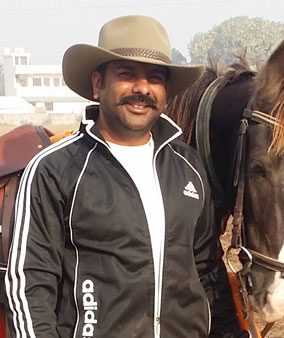
Stay close to nature at Maa Ashapura Farm – a
boutique retreat near Ranthambore National Park.
Enjoy wildlife safaris, Marwari horse experiences, yoga, nature walks, and
private dining.